
Event marketing has become a serious driver for building powerful connections between brands and people. Studies show that businesses using event marketing are 74 percent more likely to see increased sales compared to those who do not. That might sound like the usual sales pitch for digital tactics, but the secret is that the most effective events do not just push adverts or fill seats. They create personal, memorable moments that turn strangers into loyal fans.
Quick Summary
| Takeaway | Explanation |
|---|---|
| Strategic planning is essential | Align event goals with overall marketing and business objectives for greater impact. |
| Know your audience | Tailor experiences to engage specific demographics effectively. |
| Utilise multi-channel promotion | Leverage diverse platforms to expand event visibility and reach. |
| Focus on creating value | Ensure that each event provides meaningful experiences for attendees while meeting marketing goals. |
| Measure your success | Implement frameworks to track engagement metrics and refine future event strategies. |
What are Event Marketing Best Practices?
Event marketing best practices represent strategic approaches that organisations use to effectively promote, manage, and execute successful events. These practices help businesses create memorable experiences that engage target audiences, achieve specific marketing objectives, and generate meaningful connections.
Understanding Core Event Marketing Principles
At its core, event marketing involves carefully planned strategies designed to attract, interact with, and influence potential customers or stakeholders through live or virtual event experiences. Research from the National Institutes of Health emphasises that successful event marketing requires clear objectives, precise audience segmentation, and integrated communication strategies.
Key principles of effective event marketing include:
- Strategic Planning: Developing comprehensive event goals aligned with broader marketing and business objectives
- Audience Understanding: Creating tailored experiences that resonate with specific demographic groups
- Multi-Channel Promotion: Leveraging diverse communication platforms to maximise event visibility
Developing a Comprehensive Event Marketing Strategy
A robust event marketing strategy goes beyond simple promotion. It involves a holistic approach that considers every stage of event planning and execution. This includes pre-event communication, during-event engagement, and post-event follow-up.
Businesses must focus on creating value for attendees while simultaneously achieving their marketing goals. Learn more about branding your event for lasting impact to understand how strategic positioning can elevate your event marketing efforts.
Successful event marketing practitioners recognise that each event is an opportunity to build lasting relationships, showcase brand personality, and create memorable experiences that extend far beyond the event itself. By implementing these best practices, organisations can transform traditional marketing approaches into dynamic, interactive engagement strategies that genuinely connect with their target audiences.
Why Event Marketing Matters for Successful Events
Event marketing transcends traditional promotional strategies by creating immersive experiences that directly connect businesses with their target audiences. In an increasingly digital world, live and virtual events offer unique opportunities for meaningful engagement, brand storytelling, and measurable marketing outcomes.
The Strategic Importance of Event Marketing
Research from the International Journal of Environmental Research and Public Health demonstrates that effective event marketing is crucial for organisations seeking to build robust connections with their audiences. By transforming passive marketing into interactive experiences, businesses can achieve multiple strategic objectives simultaneously.
Key strategic benefits include:
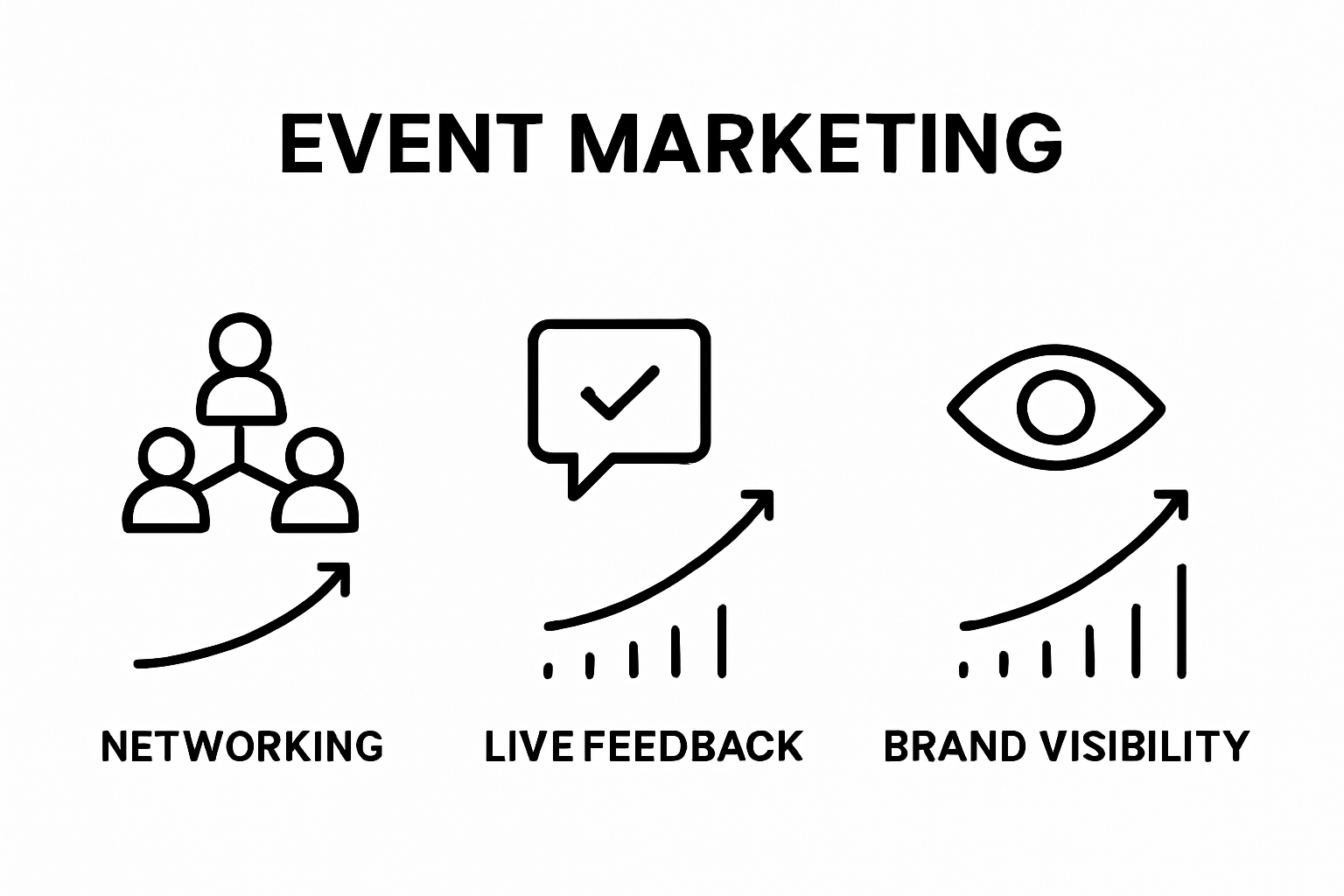
- Direct Audience Interaction: Creating personalised, memorable touchpoints that foster deeper brand relationships
- Immediate Feedback Mechanisms: Gathering real-time insights about customer preferences and perceptions
- Enhanced Brand Visibility: Generating organic word-of-mouth and social media engagement
Measuring Event Marketing Impact
Successful event marketing goes beyond mere attendance numbers. It involves creating comprehensive strategies that align with broader business goals, generating tangible returns on investment. Check out our guide on creative entertainment ideas to understand how innovative approaches can elevate event experiences.
Modern event marketing requires a holistic approach that integrates digital technologies, data analytics, and creative storytelling. By understanding audience motivations, leveraging multi-channel communication, and designing compelling experiences, businesses can transform events from simple gatherings into powerful marketing platforms that drive meaningful connections and sustainable growth.
How Event Marketing Works in Different Contexts
Event marketing is a dynamic discipline that adapts to diverse business environments, industries, and organisational objectives. Its versatility allows companies to create targeted experiences that resonate with specific audience segments across various platforms and formats.
Contextual Adaptation of Event Marketing Strategies
According to the University of Florida, successful event marketing requires clear communication of essential details like date, time, location, and cost. Different contexts demand nuanced approaches that leverage unique communication channels and audience engagement techniques.
Key contextual variations include:
- Corporate Events: Focusing on professional networking, brand positioning, and industry thought leadership
- Product Launches: Creating immersive experiences that showcase innovation and generate excitement
- Community Engagement: Building local connections and demonstrating organisational social responsibility
Multi-Platform Event Marketing Approaches
Modern event marketing transcends traditional boundaries, integrating digital and physical experiences. Learn more about protecting your event’s musical landscape to ensure comprehensive event strategy development.
Effective event marketing recognises that each context requires a tailored strategy. Whether targeting professional conferences, cultural festivals, or digital webinars, successful practitioners understand the importance of aligning event design with audience expectations, technological capabilities, and specific communication objectives. By maintaining flexibility and embracing innovative approaches, organisations can create memorable experiences that drive engagement, build brand loyalty, and achieve strategic marketing goals across diverse contexts.
This table compares the different types of event marketing contexts mentioned in the article, helping to clarify their focus and typical objectives.
| Event Context | Primary Focus | Typical Objectives |
|---|---|---|
| Corporate Events | Professional networking and brand positioning | Foster relationships, demonstrate expertise |
| Product Launches | Showcasing innovation | Build excitement, generate media and public attention |
| Community Engagement | Local connections and social responsibility | Strengthen brand image, support local communities |
Key Concepts in Event Marketing Strategy
Event marketing strategy represents a sophisticated approach to designing, implementing, and evaluating targeted experiences that connect organisations with their audiences. It combines creative vision, strategic planning, and data-driven insights to create meaningful interactions that drive business objectives.
Foundational Strategic Elements
According to the University of Florida’s Extension Marketing guide, developing an effective event marketing strategy requires careful consideration of product and consumer-oriented approaches. Understanding the critical aspects of marketing communication and selecting appropriate media channels becomes paramount in creating impactful event experiences.
Below is a table outlining the foundational strategic elements of effective event marketing, providing concise explanations for each key concept discussed in the section.
| Strategic Element | Explanation |
|---|---|
| Audience Segmentation | Precisely identifying and understanding target demographic characteristics |
| Value Proposition Development | Crafting unique experiences that differentiate the event from competitors |
| Communication Channel Optimisation | Selecting and integrating the most effective promotional platforms |
| Measurement Frameworks | Establishing systems to track engagement metrics and refine strategies |
| Alignment with Business Goals | Ensuring event objectives are consistent with broader marketing and organisational aims |
Critical strategic foundations include:
- Audience Segmentation: Precisely identifying and understanding target demographic characteristics
- Value Proposition Development: Crafting unique experiences that differentiate the event from competitors
- Communication Channel Optimization: Selecting and integrating most effective promotional platforms
Strategic Performance Measurement
Learn more about creating unforgettable event experiences to understand the intricate relationship between strategic planning and execution.
Successful event marketing strategies transcend traditional promotional tactics by establishing comprehensive measurement frameworks. These frameworks enable organisations to track engagement metrics, assess audience response, and continuously refine their approach. By embracing a holistic view that combines creative storytelling with analytical rigor, businesses can transform event marketing from a transactional activity into a strategic tool for building lasting audience relationships and achieving measurable business outcomes.
Real-World Examples of Effective Event Marketing
Real-world event marketing demonstrates the transformative power of strategic experiences that go beyond traditional promotional techniques. By creating immersive, memorable encounters, organisations can forge deep connections with their target audiences and generate significant brand engagement.
Innovative Experiential Marketing Strategies
According to the University of San Francisco, successful event marketing hinges on crafting compelling narratives, utilising unique imagery, and developing clear calls to action that resonate with participants.
Standout event marketing examples illustrate diverse approaches:
- Red Bull Stratos: An extraordinary space jump that transformed a product launch into a global media spectacle
- Apple Product Launches: Creating theatrical, anticipation-driven events that turn technology reveals into cultural moments
- SXSW Conference: Developing a multi-dimensional festival that blends technology, music, and interactive experiences
Digital and Hybrid Event Innovations
Explore our guide on creating unforgettable musical experiences to understand how innovative approaches can elevate event marketing strategies.
Modern event marketing transcends physical limitations, leveraging digital platforms to create scalable, globally accessible experiences. Successful organisations recognise that effective event marketing is not about selling a product, but about creating immersive stories that engage audiences emotionally, generate meaningful interactions, and build lasting brand relationships across multiple touchpoints and communication channels.
Bring Your Event Marketing Strategy to Life with Live Entertainment
Crafting a memorable event experience hinges on more than just careful planning and impressive objectives. As highlighted in the article, effective event marketing is about creating emotional engagement and lasting memories for your audience. Many organisers struggle to move beyond basic promotion and deliver truly immersive moments that resonate with guests. Whether you manage corporate functions, social celebrations or vibrant gatherings in Barcelona, bringing your vision to life means connecting with attendees on a personal level, just as successful event marketing best practices recommend.
If you seek to energise your next event with captivating live music and a bespoke approach, discover how our Barcelona Events can help you transform your plans into high-impact experiences. For those searching for entertainment solutions that leave guests talking long after the music fades, take the next step and contact our team today. Create the kind of event where every detail aligns with your strategy and makes a lasting impression. Your audience deserves the best—let us help you deliver it.
Frequently Asked Questions
What are the key principles of effective event marketing?
Effective event marketing is grounded in strategic planning, audience understanding, and multi-channel promotion. These principles help create memorable experiences and achieve specific marketing objectives.
How can I measure the impact of my event marketing strategy?
To measure the impact of your event marketing strategy, focus on tracking engagement metrics, assessing audience feedback, and evaluating the alignment of event outcomes with your broader business goals.
Why is audience segmentation important in event marketing?
Audience segmentation is crucial as it allows businesses to tailor experiences that resonate with specific demographic groups, enhancing engagement and fostering deeper brand relationships.
What types of events benefit from innovative marketing strategies?
Innovative marketing strategies can enhance a wide range of events, including corporate gatherings, product launches, and community engagement activities, ensuring they resonate with participants and achieve desired outcomes.


