Virtual events are transforming the way people connect and collaborate online and the numbers prove it. Research shows that virtual conferences now reach audiences up to five times larger than traditional in-person events. You might think digital events just mean staring at screens and clicking a few links. The real surprise is how these gatherings use interactive tools and clever engagement tactics to turn passive viewers into fully involved participants. This shift has made online events more inclusive, accessible, and memorable than most ever imagined.
Quick Summary
| Takeaway | Explanation |
|---|---|
| Engage participants in real-time | Utilize live polling and Q&A sessions to foster active involvement during the event. |
| Measure engagement with data metrics | Track participant interactions using metrics such as chat volume and session attendance for continuous improvement. |
| Personalise participant experiences | Offer customised content and networking options to meet individual learning preferences. |
| Expand reach beyond geographical limits | Host virtual events to include diverse audiences without travel restrictions, increasing accessibility. |
| Integrate technology for immersive experiences | Leverage advanced platforms for seamless communication and interactive learning to enhance overall engagement. |
What is Virtual Event Engagement?
Virtual event engagement represents the dynamic interaction and participation level that occurs within online event environments. Unlike traditional in-person gatherings, virtual events rely on digital platforms to create meaningful connections, foster communication, and maintain participant interest through technological tools and interactive features.
Understanding the Core Concept
At its fundamental level, virtual event engagement measures how effectively an online event captures and sustains participants’ attention, encourages active involvement, and facilitates genuine interaction. According to research from leading digital event platforms, engagement is not merely about passive attendance but about creating immersive experiences that transform spectators into active contributors.
Key characteristics of virtual event engagement include:
- Real-time communication capabilities
- Interactive digital environments
- Measurable participant involvement
- Personalised experience design
- Multimedia content integration
Measuring Virtual Event Engagement
Effective virtual event engagement can be quantified through multiple metrics that provide insights into participant interaction.
These metrics typically include:
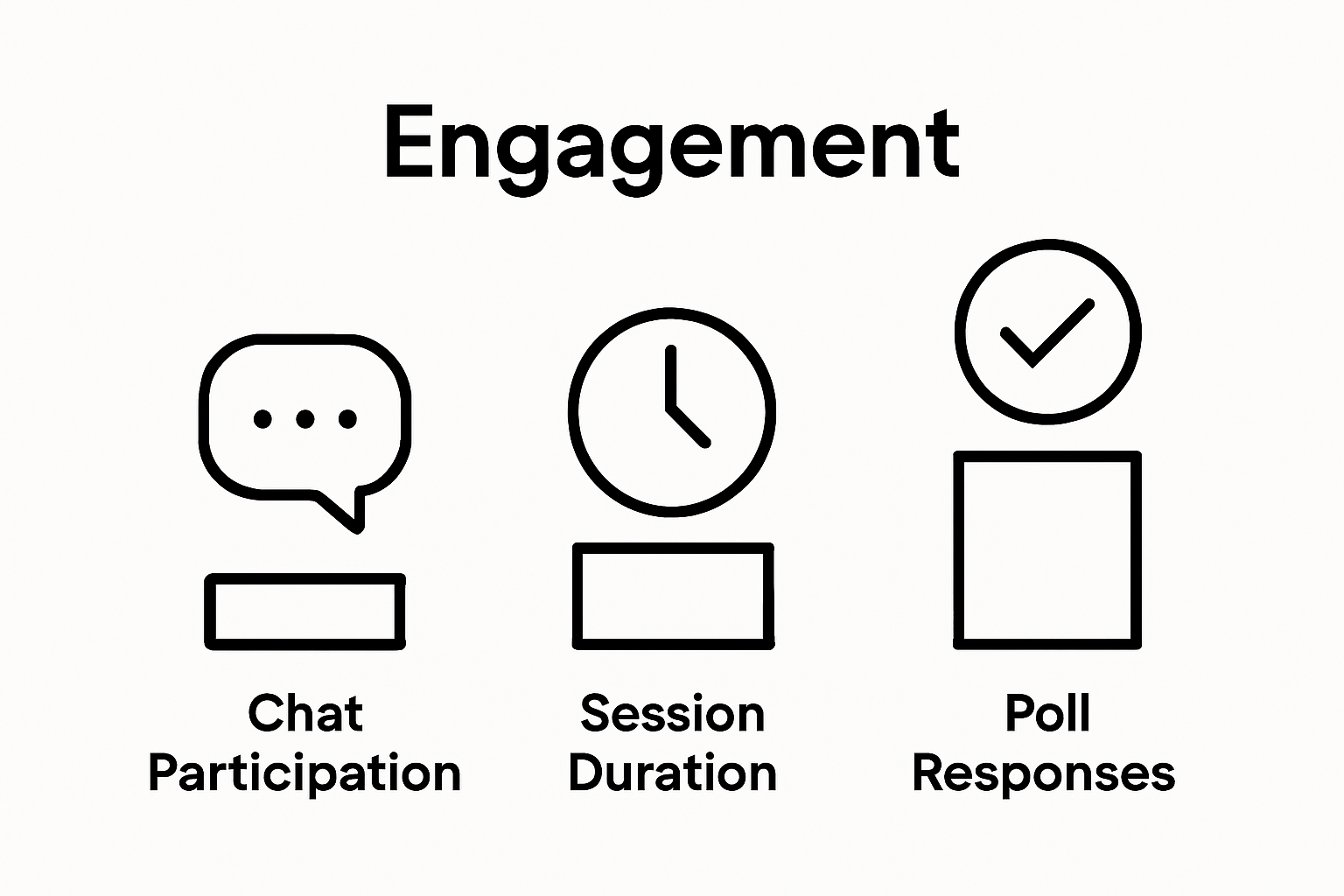
- Chat message volume and quality
- Poll and survey participation rates
- Session attendance duration
- Number of questions asked during presentations
- Networking interaction frequency
- Content download and resource utilisation rates
Successful virtual events leverage these metrics to continuously improve participant experience, ensuring that digital gatherings become increasingly sophisticated and participant-centric.
To clarify the measurable aspects of participant interaction, here is a summary table of key metrics used to track virtual event engagement:
| Engagement Metric | What It Measures | Why It Matters |
|---|---|---|
| Chat message volume and quality | Number and substance of participant messages | Indicates active communication and topic relevance |
| Poll and survey participation rates | Percentage of attendees joining polls/surveys | Reflects attentiveness and willingness to engage |
| Session attendance duration | Average time spent per session | Shows depth of interest and session stickiness |
| Number of questions asked | Volume of audience questions submitted | Demonstrates curiosity and speaker-participant interaction |
| Networking interaction frequency | Instances of attendees engaging in networking | Measures connection-building and community engagement |
| Content download and resource utilisation rates | Rate of accessing shared resources | Reveals value of shared materials and further learning interest |
Why is Virtual Event Engagement Important?
Virtual event engagement has emerged as a critical component of modern communication strategies, transforming how organisations, businesses, and individuals connect in an increasingly digital world. By prioritising meaningful participant interaction, virtual events can transcend traditional limitations of physical gatherings and create powerful, immersive experiences.
Expanding Accessibility and Reach
One of the most significant advantages of virtual event engagement is its ability to break down geographical and logistical barriers. According to research on digital event platforms, virtual events enable organisations to reach broader audiences who might otherwise be unable to participate due to travel constraints, time limitations, or financial restrictions.
Key benefits of enhanced accessibility include:
- Global participant inclusion
- Reduced travel expenses
- Increased diversity of attendees
- Flexible participation options
- Elimination of physical venue limitations
Driving Organisational and Learning Outcomes
Virtual event engagement is not merely about connecting people but about creating meaningful interactions that drive tangible outcomes. By designing interactive digital experiences, organisations can achieve multiple strategic objectives such as knowledge transfer, professional development, community building, and brand awareness.
Critical advantages of robust virtual event engagement encompass:
- Enhanced learning retention
- Real-time feedback mechanisms
- Scalable knowledge sharing
- Data-driven insights generation
- Cost-effective communication strategies
Moreover, virtual events provide unprecedented opportunities for measuring and analysing participant interactions.
To assist in comparing the distinct benefits of virtual event engagement, the table below highlights its importance for both accessibility and organisational outcomes:
| Benefit Category | Description | Representative Advantages |
|---|---|---|
| Accessibility & Reach | Breaking down geographical and logistical barriers | Global inclusion, reduced travel costs, participation flexibility |
| Organisational & Learning Outcomes | Creating meaningful, interactive experiences that drive objectives | Enhanced learning retention, real-time feedback, scalable knowledge sharing |
| Measurement & Improvement | Capability to analyse and refine event delivery via data | Data-driven insights, targeted communication, ongoing optimisation |
| The digital nature of these events allows for precise tracking of engagement metrics, enabling continuous improvement of future event experiences and more targeted communication approaches. |
By embracing virtual event engagement, organisations can create dynamic, inclusive, and impactful experiences that transcend traditional communication boundaries, fostering connection and collaboration in an increasingly interconnected world.
How Does Virtual Event Engagement Enhance Experiences?
Virtual event engagement transforms digital interactions from passive experiences into dynamic, interactive journeys that captivate participants and deliver exceptional value. By leveraging innovative technological tools and strategic design principles, organisations can create immersive environments that transcend traditional communication barriers.
Interactive Learning and Participation
Interactive features are fundamental to enhancing virtual event experiences. According to research from Cornell University’s Conference Services, virtual platforms enable participants to engage through multiple channels, creating rich, multidimensional learning opportunities.
Key interactive elements that elevate participant experience include:
- Live polling and real-time feedback mechanisms
- Q&A sessions with direct speaker interaction
- Breakout room discussions
- Collaborative digital whiteboards
- Personalised learning pathways
Personalisation and Customised Experiences
Advanced virtual event platforms now offer unprecedented levels of personalisation, allowing participants to curate their own event journeys. This approach transforms passive attendance into active, tailored experiences that align with individual learning preferences and professional objectives.

Strategic personalisation techniques encompass:
- Adaptive content recommendation systems
- Customisable event dashboards
- Individual networking matching algorithms
- Flexible session selection
- Targeted content tracks
By implementing sophisticated engagement strategies, virtual events can create memorable, impactful experiences that not only inform but also inspire and connect participants across geographical boundaries. The future of digital interaction lies in designing experiences that are as dynamic, responsive, and nuanced as the individuals participating in them.
Key Concepts in Virtual Event Engagement
Virtual event engagement encompasses a complex ecosystem of technological, psychological, and strategic elements that work together to create meaningful digital interactions. Understanding these foundational concepts enables organisations to design more effective and compelling online experiences that resonate with participants.
Technological Infrastructure and Interaction Channels
The technological backbone of virtual event engagement determines the quality and depth of participant interaction. According to research from digital collaboration platforms, robust digital infrastructure provides the essential framework for creating immersive and interactive environments.
Critical technological components include:
- Seamless video communication platforms
- Advanced networking tools
- Interactive session management systems
- Real-time collaboration features
- Secure data transmission protocols
Psychological Engagement Mechanisms
Beyond technological capabilities, virtual event engagement relies on understanding human interaction dynamics in digital spaces. Effective engagement strategies must address psychological needs for connection, recognition, and meaningful participation.
Key psychological engagement principles encompass:
- Creating a sense of community
- Facilitating authentic interactions
- Providing personalised experiences
- Offering opportunities for meaningful contribution
- Maintaining participant motivation
Successful virtual events integrate technological infrastructure with nuanced psychological approaches, transforming digital interactions from transactional experiences into genuine connections. By recognising the intricate relationship between technology and human experience, organisations can design virtual events that are not just informative, but truly transformative.
Here is a summary table categorising psychological and technological elements essential to achieving strong virtual event engagement:
| Key Concept | Description | Examples/Mechanisms |
|---|---|---|
| Technological Infrastructure | The digital backbone enabling high-quality interactions | Video platforms, interactive tools, secure protocols |
| Interaction Channels | Available methods for participant connection and collaboration | Chat, networking features, session management |
| Psychological Engagement | Designing experiences that meet human motivational needs | Community-building, recognition, personalisation |
| Personalised Experience Design | Customisation aligned with individual participant preferences | Adaptive dashboards, targeted content tracks |
Real-world Applications of Virtual Event Engagement
Virtual event engagement has transcended theoretical concepts to become a practical solution across diverse industries, revolutionising how organisations communicate, educate, and collaborate in digital environments. From healthcare conferences to corporate training programmes, these innovative approaches are reshaping interaction paradigms.
Professional Development and Training
Organisations are increasingly leveraging virtual event engagement to deliver comprehensive professional development experiences. According to research in medical education platforms, virtual conferences and training sessions enable global knowledge sharing with unprecedented accessibility and interactivity.
Key applications in professional development include:
- Global medical conference participation
- Interactive corporate training workshops
- Continuous professional education programmes
- Cross-geographical skill development sessions
- Specialised industry webinars
Academic and Educational Environments
Educational institutions are transforming learning experiences by implementing sophisticated virtual engagement strategies that extend beyond traditional classroom boundaries. These approaches create dynamic, inclusive learning environments that accommodate diverse student needs and learning styles.
Significant educational virtual engagement applications encompass:
- International academic conferences
- Remote learning programmes
- Collaborative research symposiums
- Interactive student workshops
- Multicultural educational exchanges
By integrating advanced technological tools with strategic engagement approaches, organisations can create immersive digital experiences that transcend geographical limitations. Virtual event engagement represents more than a technological solution it is a powerful mechanism for fostering global connection, knowledge exchange, and collaborative innovation across multiple sectors.
Ignite Engagement at Your Next Event with Calle Habana
Virtual event engagement thrives on live interaction, real-time energy, and personalised experiences. Yet, many organisers find it challenging to keep guests genuinely involved and excited throughout each stage of their special occasion. If you are aiming to boost immersive participation and replicate the vibrancy highlighted in “Understanding Virtual Event Engagement: A Complete Guide,” then incorporating unforgettable live entertainment is the missing piece. High-quality performances and interactive music not only create atmosphere but also foster genuine connection among your guests, ensuring your event is both memorable and dynamic.
Bring the essential elements of engagement—real connection, tailored experiences, and high-energy moments—directly to your event. Discover our customisable live music solutions and see how we transform virtual concepts into real-world excitement. Ready to capture the attention of your guests and offer them an extraordinary experience? Visit Calle Habana’s contact page to speak with us about your vision. Take your celebration to the next level and make your event truly stand out. Act now and let Calle Habana turn your next gathering into a vibrant, unforgettable occasion.
Frequently Asked Questions
What is virtual event engagement?
Virtual event engagement refers to the level of interaction and participation during online events, measuring how effectively these events capture and maintain participants’ attention while encouraging active involvement.
Why is virtual event engagement important?
Virtual event engagement is crucial as it expands accessibility, allowing a broader audience to participate, and drives organisational and learning outcomes through meaningful interactions that foster community building and knowledge transfer.
How can virtual event engagement enhance participant experiences?
Virtual event engagement enhances experiences by introducing interactive features such as live polling, Q&A sessions, and personalised learning pathways, transforming passive attendance into active participation.
What metrics are used to measure virtual event engagement?
Metrics for measuring virtual event engagement include chat message volume, poll participation rates, session attendance duration, the number of questions asked, and networking interactions, helping organisers refine future events.