
Many british couples in Barcelona are discovering that choosing the right salsa genre can set the tone for an unforgettable Latin-themed wedding. With over 60 percent of guests preferring music that reflects authentic cultural roots, understanding the differences between Cuban, Colombian, and New York styles can help planners design a truly unique celebration. This guide breaks down salsa genres so planners can confidently match performances to diverse client tastes and create memorable event atmospheres.
Key Takeaways
| Point | Details |
|---|---|
| Understanding Salsa Styles | Salsa encompasses distinct genres like Cuban Casino and New York, each with unique cultural origins and dance techniques. |
| Misconceptions About Salsa | Many believe salsa styles are interchangeable; however, differences such as circular versus linear movements significantly impact dance. |
| Cultural Significance | Each regional salsa style reflects its community’s social narratives and historical experiences, enhancing cultural connection through dance. |
| Event Planning Considerations | Choosing the right salsa style for events is crucial, as it impacts the atmosphere and guest engagement based on the specific characteristics of each style. |
Defining Salsa Genres and Misconceptions
Salsa represents a complex and vibrant dance form with multiple intricate genres that often perplex even passionate dancers. Understanding these nuanced styles requires moving beyond simplistic stereotypes and exploring the rich cultural tapestry that defines each variation. Exploring salsa’s musical landscape reveals how diverse these dance styles truly are.
At its core, salsa encompasses several distinct genres, each with unique rhythmic patterns, cultural origins, and dance techniques. These include Cuban Son, Colombian Salsa, Puerto Rican Salsa, and Los Angeles (LA) and New York (NY) styles—each representing a different musical interpretation and movement philosophy. While many assume salsa is a monolithic dance form, practitioners understand that regional variations significantly influence choreography, musical accompaniment, and performance aesthetics.
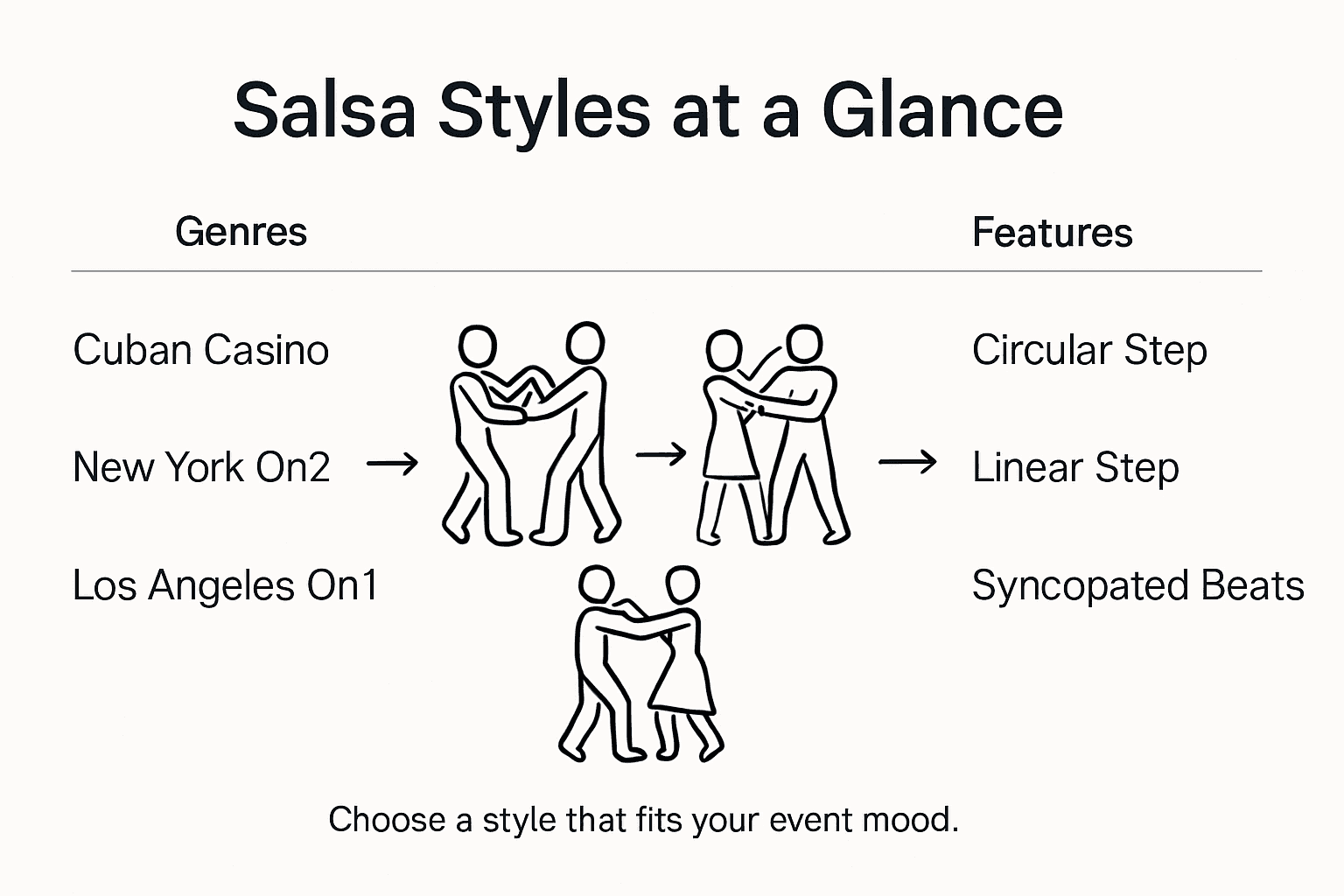
The most common misconception about salsa involves believing all styles are interchangeable. In reality, Cuban salsa (Casino) differs dramatically from linear styles like LA or NY salsa. Casino emphasises circular movements and partner interaction rooted in Afro-Cuban traditions, whereas linear styles prioritise sharp, linear patterns and more structured choreographic approaches. These differences stem from complex historical and cultural contexts that shape each genre’s unique expression.
Pro tip: When selecting a salsa style for your wedding or event, consider consulting professional dancers who can help you understand the nuanced characteristics of each genre and select the most appropriate performance style.
Main Salsa Styles and Their Origins
Salsa dancing represents a dynamic art form with multiple regional interpretations, each reflecting unique cultural narratives and musical traditions. The evolution of salsa styles globally reveals a rich tapestry of movement that transcends simple choreography, embodying complex historical and social interactions.
Four primary salsa styles dominate the contemporary dance landscape: Cuban Casino, New York On2, Los Angeles On1, and Colombian Cali style. Each style emerged from distinct cultural contexts, with Cuban Casino representing the most traditional form, rooted deeply in Afro-Cuban dance traditions. New York Style, developed in the 1970s by pioneers like Eddie Torres, introduced a more structured linear approach that emphasised precise timing and intricate footwork, transforming salsa from a social dance into a sophisticated performance art.
The geographical diversity of salsa styles demonstrates how dance evolves through cultural exchange and local innovation. Cuban Casino style features circular movements and close partner connections, reflecting the communal dance traditions of Havana. In contrast, Los Angeles Style prioritises dramatic linear movements and performance-oriented choreography, while Colombian Cali Style is renowned for its rapid footwork and high-energy execution. These variations highlight salsa’s capacity to adapt and reflect local musical interpretations and social dynamics.
Pro tip: When learning salsa, start by understanding the fundamental characteristics of different styles and choose a genre that resonates with your personal movement preferences and cultural interests.
To clarify the distinctive elements of major salsa styles, consider the following comparative overview:
| Style | Typical Movements | Musical Structure | Event Suitability |
|---|---|---|---|
| Cuban Casino | Circular, interactive | Polyrhythmic, Son-based | Intimate, communal events |
| New York On2 | Linear, precise steps | Sharp brass, On2 timing | Large, performance-focused |
| Los Angeles On1 | Dramatic, showy lines | Strong downbeat, On1 lead | Spectacular celebrations |
| Colombian Cali | Rapid, energetic footwork | Quick tempo, lively rhythm | Youthful, high-energy parties |
Musical Structure and Dance Techniques
Salsa music represents a complex rhythmic landscape where percussion, brass, and vocal elements intertwine to create a vibrant dance experience. Understanding bachata’s musical relationship provides valuable context for appreciating salsa’s intricate musical composition, which typically features a core rhythm known as clave, forming the fundamental structural backbone of the music.
The musical structure of salsa is characterised by sophisticated polyrhythmic patterns that demand precise dancer interaction. Most salsa styles follow an eight-count musical phrase, with dancers typically executing intricate footwork patterns that synchronise with specific instrumental breaks and rhythmic accents. Cuban Casino style, for instance, emphasises circular movement patterns that match the circular rhythmic patterns of traditional son music, while New York style prioritises linear movements aligned with sharp brass and percussion transitions.
Technical dance elements vary significantly across salsa styles, with each approach demanding unique skills and body mechanics. Linear styles like Los Angeles and New York salsa require sharp, precise movements with distinct weight transfers and dramatic styling, whereas Cuban Casino emphasises fluid, circular motions with more relaxed upper body movements. Dancers must develop nuanced body control, understanding how to interpret complex musical phrases through precise footwork, partner connection, and rhythmic interpretation.
Pro tip: Practice listening to salsa music without dancing, focusing on identifying different instrumental layers and rhythmic patterns to develop a more intuitive understanding of musical structure and movement synchronisation.
Cultural Influences and Regional Variations
The complex cross-cultural dynamics of salsa dance reveal a profound narrative of migration, cultural fusion, and identity expression. Salsa represents far more than a mere dance form—it is a living, breathing cultural dialogue that emerges from the intricate historical interactions between Caribbean, Latin American, and North American communities.
Each regional salsa style encapsulates unique social narratives and historical experiences. Cuban Casino style, for instance, directly reflects the communal dance traditions of Havana, embodying African and Spanish cultural intersections. New York style emerged from Puerto Rican immigrant communities, transforming urban social spaces into vibrant platforms of cultural exchange. Colombian Cali style demonstrates how local communities reinterpret dance as a form of cultural resilience, incorporating rapid footwork that speaks to the region’s energetic social dynamics.
The geographical variations in salsa styles demonstrate remarkable adaptability and cultural creativity. Different communities have not merely adopted salsa but have actively reimagined it, infusing local rhythms, movement philosophies, and social meanings. These variations are testament to salsa’s capacity to serve as a dynamic language of cultural communication, where body movements articulate complex histories of displacement, resistance, and collective identity formation.
Pro tip: When exploring different salsa styles, approach each variation with cultural respect and curiosity, recognising that every regional interpretation represents a unique story of human connection and creative expression.
Here is a summary of how cultural origins influence salsa style and community identity:
| Salsa Style | Cultural Roots | Social Impact |
|---|---|---|
| Cuban Casino | Afro-Cuban, Spanish heritage | Fosters community & tradition |
| New York On2 | Puerto Rican immigrant culture | Drives urban creativity & fusion |
| Colombian Cali | Regional reinterpretation | Celebrates local resilience |
| LA On1 | Hollywood performance culture | Focuses on entertainment appeal |
Impact on Event Atmosphere and Planning
Salsa dance styles profoundly influence event dynamics, transforming wedding receptions and corporate gatherings into electrifying experiences. Understanding the nuanced differences between bachata and salsa performance styles provides critical insights into selecting the most appropriate musical entertainment for specific occasions.
Each salsa style creates a distinct atmospheric energy that can dramatically shape guest engagement and emotional experience. Cuban Casino style, with its circular movements and intimate partner connections, generates a warm, communal ambience perfect for smaller, more personal events. In contrast, New York and Los Angeles styles, characterised by sharp, dramatic movements, deliver high-energy performances ideal for larger celebrations where visual spectacle and dynamic interaction are paramount. Wedding planners and event organisers must carefully consider these stylistic variations to curate an authentic and compelling dance experience.
Practical considerations extend beyond aesthetic choices. Different salsa styles require specific musical arrangements, dancer skill levels, and spatial configurations. Linear styles demand more expansive dance floors, whereas Cuban Casino can operate effectively in more intimate settings. Factors such as venue size, guest demographics, and cultural background play crucial roles in determining the most suitable salsa performance approach. Sophisticated event planners recognise that musical genre selection is not merely about entertainment, but about creating meaningful cultural connections and memorable shared experiences.
Pro tip: Consult professional salsa performers who can provide tailored recommendations about which dance style best matches your specific event’s atmosphere, venue characteristics, and guest expectations.
Choose the Perfect Salsa Style to Elevate Your Event
Navigating the rich variety of salsa styles can be challenging when planning a memorable occasion. The article highlights how distinct salsa genres like Cuban Casino, New York On2, and Los Angeles On1 offer unique energy and movement philosophies that shape the atmosphere of your event. Understanding these nuances is essential to matching your event’s vibe with the right musical and dance expressions. Whether you want the communal warmth of Cuban Casino or the dramatic flair of Los Angeles style, selecting the ideal salsa performance will enhance guest engagement and create unforgettable moments.
At Calle Habana, we specialise in vibrant live Latin music tailored to your event’s unique needs. Explore our Salsa Music and Dance offerings to discover how our experienced performers bring authentic styles to life. Take advantage of our customised entertainment packages designed to complement every phase of your celebration. Ready to infuse your wedding or event with the perfect salsa rhythm and style Know exactly what you want or need expert guidance Our team is here to help you craft a lively, culturally rich experience that your guests will remember. Contact us today at https://callehabana.es/en/contact to start planning your spectacular salsa event.
Frequently Asked Questions
What are the main differences between the various salsa styles?
Each salsa style features unique rhythmic patterns, movements, and cultural origins. For instance, Cuban Casino focuses on circular movements and partner interaction, while New York Salsa emphasises linear patterns and precise footwork.
How do cultural influences shape different salsa genres?
Cultural influences are key to each salsa genre’s identity. For example, Cuban Casino reflects Afro-Cuban traditions and communal dance, whereas New York Salsa was shaped by Puerto Rican immigrant communities and urban social dynamics.
Why is it important to choose the right salsa style for an event?
Choosing the right salsa style is essential for creating the desired atmosphere. Different styles generate varying energies; for instance, Cuban Casino fosters intimacy, while New York Salsa or LA Salsa delivers high-energy performances suitable for larger celebrations.
How can I select the most appropriate salsa genre for my dance practice?
When selecting a salsa genre, consider your personal movement preferences and cultural interests. Learning about the fundamental characteristics of each style can help you choose one that resonates with you and enhances your dancing experience.