

Salsa dancing attire is far more than just picking a flashy outfit for a night out. Some dancers say the right clothes can spell the difference between clumsy steps and absolute confidence, and biomechanical studies show the right gear even reduces injury risks. What might surprise you is that the secret to a memorable salsa experience goes well beyond eye-catching looks, as your clothing and footwear quietly shape every spin, turn and connection on the dancefloor.
Quick Summary
| Takeaway | Explanation |
|---|---|
| Choose flexible apparel for optimal movement | Salsa attire should support freedom of movement while ensuring comfort during intricate dance sequences. |
| Invest in quality salsa shoes for performance | Proper footwear is essential for stability, technique, and preventing injuries during salsa dancing. |
| Select moisture-wicking fabrics for comfort | Look for lightweight and breathable textiles that enhance comfort and performance during intense dance routines. |
| Accessorise strategically, prioritising functionality | Choose accessories that complement movement and express cultural heritage while enhancing dance performance, not hindering it. |
| Reflect cultural expressions in your attire | Dance clothing should celebrate the cultural roots of salsa, connecting personal style with broader historical narratives. |
The Essence of Salsa Dancing Attire: Comfort and Style
Salsa dancing attire represents more than just clothing choices. It is a dynamic fusion of functionality, personal expression, and cultural appreciation that directly impacts a dancer’s performance and confidence. Understanding the nuanced relationship between what you wear and how you move is fundamental to creating an exceptional dance experience.
Movement and Mobility: The Core of Salsa Attire
In salsa dancing, your clothing must support unrestricted movement while maintaining style and elegance. According to biomechanical research on dance performance, the right attire can significantly enhance a dancer’s range of motion and reduce potential injury risks. Dancers require garments that stretch, flow, and respond seamlessly to rapid turns, intricate footwork, and close partner interactions.
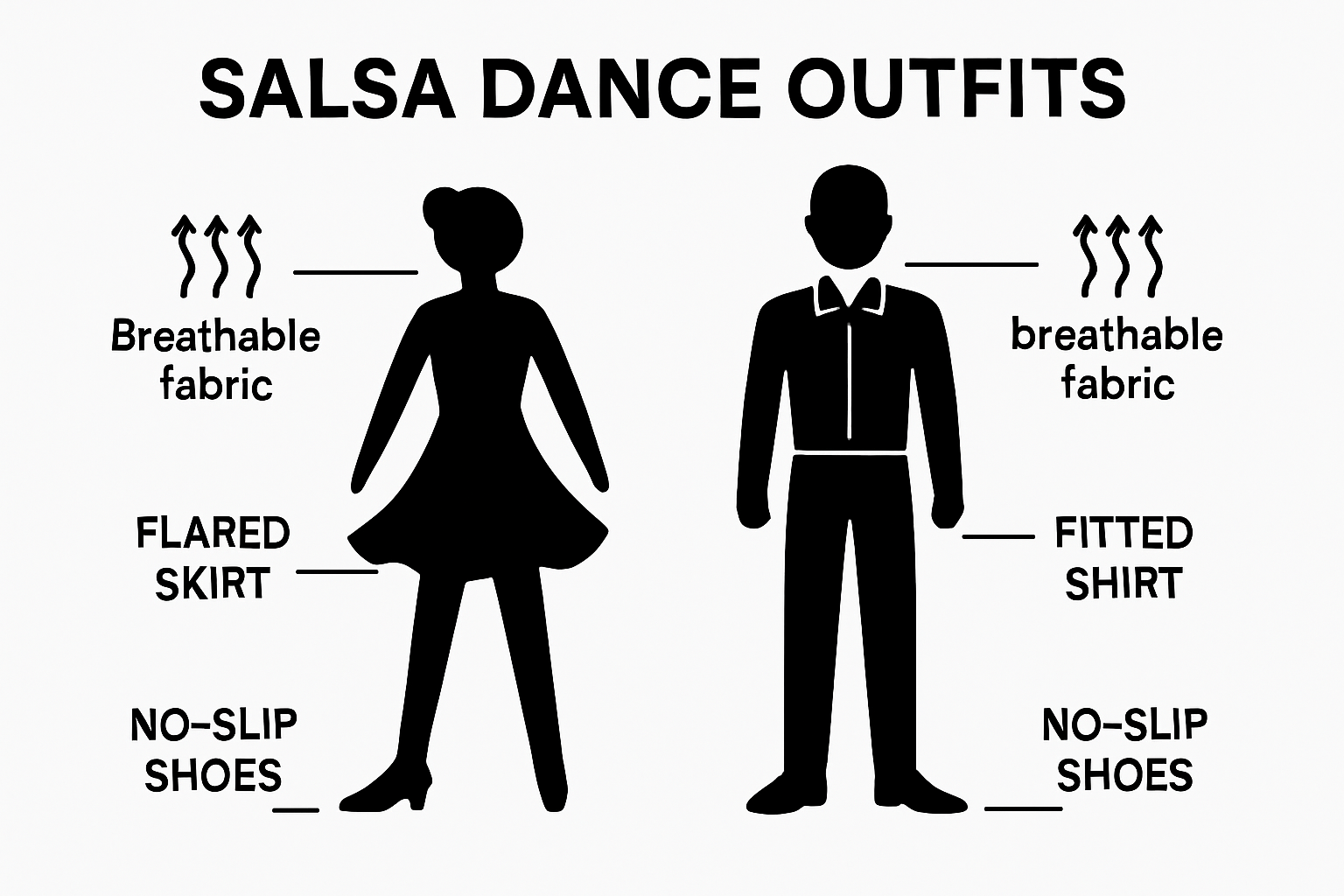
Key Performance Considerations for Salsa Attire:
- Fabric elasticity and breathability
- Lightweight materials that allow swift movements
- Garments that maintain shape during intense dance sequences
Cultural Expression Through Dance Clothing
Beyond technical performance, salsa attire embodies a rich cultural narrative. The clothing reflects the vibrant energy of Latin dance traditions, celebrating both individual style and collective heritage. Women often choose form-fitting dresses with flared skirts that accentuate spinning movements, while men typically opt for tailored shirts and comfortable trousers that allow dynamic body motions.
For those interested in exploring the musical backdrop of these dance styles, our guide on salsa music provides deeper insights into the rhythmic foundations that inspire such expressive attire.
Ultimately, successful salsa dancing attire strikes a delicate balance between personal comfort, aesthetic appeal, and functional design. It is not merely about looking good, but feeling confident and unrestricted as you interpret the music through movement.
The Importance of Choosing the Right Footwear for Salsa
Footwear is arguably the most critical element in salsa dancing, serving as the fundamental connection between a dancer’s body and the dance floor.
The right shoes can elevate performance, prevent injuries, and enhance the overall dancing experience by providing essential support, flexibility, and style.
Biomechanical Considerations in Salsa Dance Shoes
According to dance injury prevention research, selecting appropriate footwear is crucial for maintaining proper technique and minimizing injury risks. Salsa dance shoes must accommodate complex foot movements, including quick turns, precise weight shifts, and intricate stepping patterns.
Essential Shoe Characteristics for Salsa Dancing:
- Flexible soles that allow smooth gliding and spinning
- Secure ankle support without restricting movement
- Lightweight construction for enhanced agility
- Cushioned insoles to absorb impact during high-energy dance sequences
Style and Performance: Matching Shoes to Dance Technique
Different dance styles within salsa require nuanced footwear choices. Women typically prefer dance heels that provide height and accentuate leg movements, while men often select sleek leather shoes with suede or leather soles that facilitate smooth sliding and pivoting.
For dancers looking to complement their footwear with the perfect musical backdrop, our guide on salsa music offers insights into selecting rhythmic accompaniments that match your dancing style.
Ultimately, investing in high-quality, purpose-designed salsa shoes is not merely a fashion statement but a critical component of technical proficiency and injury prevention. The right footwear transforms dance from a physical activity into an art form, enabling dancers to express themselves with confidence and grace.
The following table summarises the essential features and functional benefits of salsa shoes for both men and women, aiding dancers in selecting appropriate footwear for their needs.
| Shoe Feature | Benefit for Dancers | Application (Men/Women) |
|---|---|---|
| Flexible Soles | Enables smooth gliding and spinning | Both |
| Secure Ankle Support | Stability during turns and quick steps | Both |
| Lightweight Design | Enhanced agility and reduced fatigue | Both |
| Cushioned Insoles | Absorbs impact in high-energy routines | Both |
| Dance Heels | Accentuates leg lines, adds height | Predominantly Women |
| Suede/Leather Soles | Facilitates sliding and pivoting | Predominantly Men |
Fabrics and Fit: How Clothing Choices Affect Movement
In salsa dancing, clothing is far more than aesthetic decoration. It represents a sophisticated interaction between fabric technology, body mechanics, and dance performance. Understanding how different textiles and garment designs influence movement is crucial for dancers seeking both style and functional excellence.
The Science of Fabric Performance
According to research on textile dynamics, fabric selection directly impacts a dancer’s range of motion and comfort. Elastic recovery, the fabric’s ability to return to its original shape after stretching, becomes paramount in dance attire. Dancers require materials that can withstand intense physical movements while maintaining structural integrity.
Critical Fabric Performance Attributes:
- High elastic recovery percentage
- Moisture-wicking capabilities
- Lightweight and breathable composition
- Minimal resistance during complex body movements
Psychological and Physical Dimensions of Dance Clothing
Beyond technical performance, clothing influences a dancer’s psychological state and self-perception. The right attire can boost confidence, enhance body awareness, and facilitate more expressive movements. Women might choose form-fitting dresses with strategic stretch panels, while men opt for shirts with gusset underarms that provide additional mobility.
For dancers seeking to understand how music complements their movement, our guide on salsa music offers fascinating insights into rhythm and performance.
Ultimately, selecting salsa dance clothing is a nuanced art form that balances biomechanical functionality, personal style, and cultural expression. The ideal garment becomes an extension of the dancer’s body, enabling seamless, fluid movement that transforms technical steps into an emotionally resonant performance.
Cultural Influences on Salsa Dancing Fashion
Salsa dancing fashion transcends mere clothing choices, representing a profound narrative of cultural heritage, historical migration, and artistic expression. Each garment tells a story of interconnected rhythms, movements, and traditions that span continents and generations.
Roots of Salsa Dance Attire
According to research on salsa’s cultural traditions, salsa dance fashion emerged from a complex fusion of African, Caribbean, and Latin American influences. The clothing reflects the dance’s rich historical tapestry, embodying the migratory experiences of communities from Cuba, Puerto Rico, and Colombia who transported their cultural expressions through music and dance.
Key Cultural Elements in Salsa Fashion:
- Vibrant color palettes representing Caribbean energy
- Fluid fabrics that enable expressive body movements
- Design elements reflecting African and Latin diaspora aesthetics
- Incorporation of traditional textile techniques
Regional Variations in Dance Styling
Different salsa styles cultivate unique fashion statements. Cuban salsa often features more relaxed, flowing clothing that allows intricate body movements, while Colombian salsa tends towards more structured, fitted designs that emphasize precise footwork and turns. Puerto Rican salsa fashion frequently integrates bold patterns and experimental cuts that celebrate individual expression.
For dancers interested in exploring related dance traditions, our guide on bachata music and dance offers fascinating insights into complementary Caribbean dance styles.
Ultimately, salsa dancing fashion is a living, breathing art form that continues to evolve. It represents more than aesthetic preference—it is a powerful medium of cultural communication, allowing dancers to connect with their heritage, express individual creativity, and celebrate the vibrant spirit of Latin dance traditions.
Below is a comparison table outlining the typical attire differences and cultural distinctions across regional salsa dance styles, helping clarify how fashion adapts to stylistic and aesthetic needs.
| Salsa Style | Typical Clothing Features | Key Cultural Elements |
|---|---|---|
| Cuban | Relaxed, flowing garments | Emphasis on body movement, Caribbean roots |
| Colombian | Structured, fitted outfits | Focus on precise footwork, Latin aesthetics |
| Puerto Rican | Bold patterns, experimental cuts | Celebrates individual expression, diaspora |
| General/Other | Blends fitted and flowing attire | Vibrant colours, celebrates collective spirit |
Accessorising for Salsa: Balancing Style and Practicality
Accessories in salsa dancing are not mere decorative elements but strategic components that enhance performance, express cultural identity, and contribute to the dancer’s overall aesthetic and functional experience. Understanding how to select and integrate accessories can transform a standard dance outfit into a dynamic, expressive ensemble.
Strategic Accessory Selection
According to cross-cultural dance performance research, accessories serve multiple purposes beyond visual appeal. Thoughtful accessorising involves considering movement dynamics, cultural significance, and personal comfort. Dancers must balance ornamental choices with practical considerations that support fluid, unrestricted dance movements.
Critical Accessory Considerations:
- Lightweight jewellery that does not impede movement
- Hair accessories that secure hair during intense dance sequences
- Minimal, well-fitted accessories that complement dance attire
- Culturally resonant pieces that reflect salsa’s rich heritage
Performance and Cultural Expression
Salsa accessories often tell a story, bridging personal style with cultural tradition. Women might incorporate statement earrings that swing dramatically during turns, while men could choose subtle cufflinks or a sleek watch that reflects the dance’s sophisticated rhythms. The key is selecting pieces that enhance rather than restrict movement.
For dancers seeking to deepen their understanding of Latin dance traditions, our guide on bachata music and dance provides additional context about Caribbean dance aesthetics.
Ultimately, accessorising for salsa is an art form that requires careful consideration. The perfect accessory should feel like an extension of the dancer’s body—elegant, functional, and capable of expressing the passionate spirit inherent in salsa dancing.
Take Your Salsa Experience Beyond the Dance Floor
You have now discovered how the right salsa attire enhances your freedom of movement and confidence on the dance floor. Yet, you may still find yourself looking for an event where your new knowledge and style can truly shine. The challenge is not just about what to wear, but also about finding a place where the rhythm and atmosphere elevate your passion for salsa. We understand how essential the perfect music and vibrant ambiance are in making your dancing moments unforgettable.
If you want to immerse yourself in authentic salsa energy and showcase your style, let us help you create the ideal setting. At Calle Habana, our live musical acts specialise in capturing the true spirit of Latin music. Explore our Salsa Music offerings for inspiration and see how music completes your celebration. Planning something special, such as a wedding or party? Our Dance event solutions ensure every detail is tailored for the ultimate dance experience. Do not wait to bring your vision to life. Connect with our team today via our contact page and enjoy a fully personalised approach to planning an unforgettable night of music, energy and style.
Frequently Asked Questions
What type of fabric is best for salsa dancing attire?
Clothing for salsa dancing should be made from lightweight, breathable fabrics with high elasticity and moisture-wicking capabilities to maintain comfort and freedom of movement while dancing.
How important is footwear in salsa dancing?
Footwear is crucial in salsa dancing as it provides support, flexibility, and a connection to the dance floor. The right shoes should have flexible soles, secure ankle support, and be lightweight to facilitate smooth movements and prevent injuries.
Should I choose form-fitting or loose clothing for salsa dancing?
Form-fitting clothing is typically preferred in salsa dancing as it allows for unrestricted movement and showcases the body’s lines, enhancing both performance and visual appeal. However, the clothing should also have a degree of flexibility and comfort.
How can accessories enhance my salsa dancing outfit?
Accessories can enhance a salsa dancing outfit by adding cultural expression and personal style. However, it’s important to choose lightweight pieces that do not impede movement, ensuring they complement the overall attire and enhance performance.


