

Salsa Music – Guide for Weddings & Events
Salsa music lights up dance floors and brings people together everywhere, from Havana’s nightclubs to Madrid’s wedding halls. Skip the notion that it’s just background noise for parties. Salsa actually traces its roots back to Cuba, fusing Spanish guitar with African percussion, and then exploded across the globe from New York City in the 1970s. The real surprise is how this one genre can completely transform any event, creating shared joy and cultural connection with every beat.
Table of Contents
- The Origins And Evolution Of Salsa Music
- Key Features And Instruments In Salsa
- How Salsa Music Enhances Events And Weddings
- Tips For Choosing Salsa Bands In Spain
Quick Summary
| Takeaway | Explanation |
|---|---|
| Salsa music has rich cultural origins. | Its roots lie in Cuban music, blending son, mambo, and cha-cha-chá. |
| New York City was crucial to salsa’s evolution. | Latino musicians fused diverse musical traditions, creating a unique sound in the 1960s and 70s. |
| Salsa enhances events with emotional depth. | Its rhythms encourage guest interaction, transforming ordinary gatherings into joyful celebrations. |
| Choose professional salsa bands for optimal experience. | Look for bands that demonstrate versatility, audience engagement, and cultural authenticity. |
| Salsa music adapts to various event phases. | It offers both lively dance tracks and soft background music to suit different moments seamlessly. |
The Origins and Evolution of Salsa Music
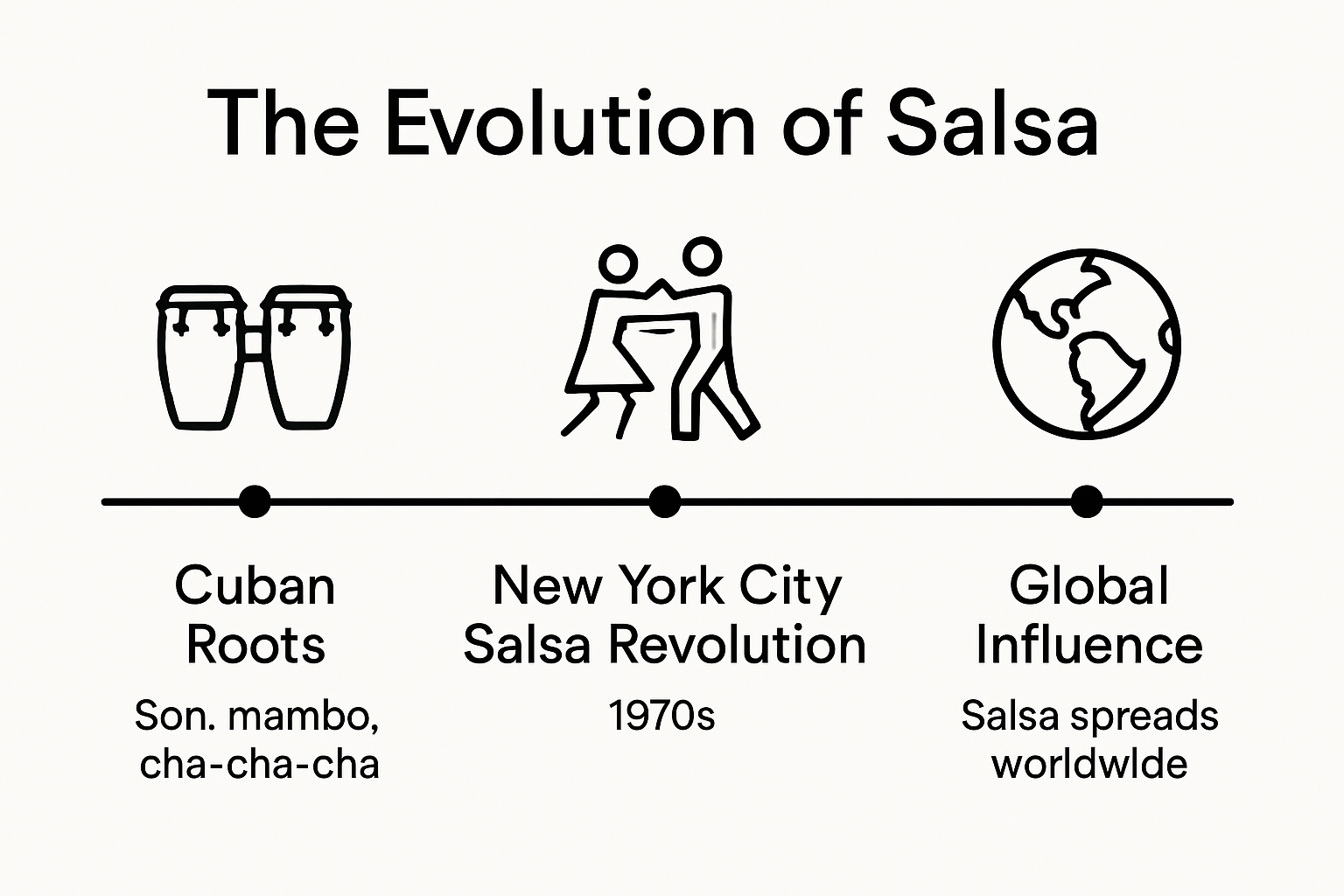
Salsa music represents a vibrant musical journey that weaves together rich cultural traditions and dynamic rhythmic innovations. This electrifying genre emerged from a complex musical landscape that blended multiple Caribbean and Latin American musical styles, creating a sound that would ultimately become a global phenomenon.
The Cuban Musical Roots
The foundations of salsa music can be traced directly to Cuba, where multiple musical traditions converged to create something extraordinary. According to Encyclopedia Britannica, salsa evolved from traditional Cuban dance music styles like son, mambo, and cha-cha-chá. These foundational rhythms provided the essential musical DNA that would later transform into the salsa we know today.
The son cubano, in particular, played a crucial role in salsa’s development. This musical style combined Spanish guitar traditions with African percussion, creating a syncopated rhythm that would become fundamental to salsa’s characteristic sound. Musicians in Cuba began experimenting with these rhythms, gradually developing more complex arrangements that would set the stage for salsa’s emergence.
New York City and the Salsa Revolution
While Cuba birthed the initial musical elements, New York City became the crucible where salsa was truly forged. During the 1960s and 1970s, Latino musicians in New York, particularly those with Puerto Rican and Cuban heritage, began synthesizing various musical traditions. They integrated elements of American jazz, Caribbean rhythms, and their own cultural musical expressions to create a new, vibrant sound.
The city’s diverse musical environment allowed musicians to experiment and collaborate, breaking down traditional musical boundaries. Legendary bands and musicians like Tito Puente, Willie Colón, and Héctor Lavoe became instrumental in defining salsa’s distinctive style. Research from the Smithsonian Folkways highlights how these artists transformed local musical scenes into a global cultural movement.
Global Expansion and Cultural Significance
From its origins in Cuba and New York, salsa quickly spread across Latin America and eventually worldwide. The music became more than just a genre—it represented a cultural expression of Latino identity, resilience, and joy. Salsa transcended musical boundaries, becoming a powerful form of social communication and community connection.
Today, salsa remains a dynamic and evolving musical style. Check out our guide on Cuban musical performances to explore how this rich tradition continues to inspire musicians and dancers around the world. Whether performed by small ensembles or large orchestras, salsa continues to capture the hearts of people through its infectious rhythms and passionate energy.
The story of salsa is ultimately a narrative of cultural fusion, artistic innovation, and the incredible power of music to connect people across different backgrounds and experiences.
Key Features and Instruments in Salsa
Salsa music is a complex and dynamic genre characterized by its intricate rhythms, vibrant instrumentation, and powerful musical interplay. Understanding the key features and instruments that define this musical style reveals the depth and sophistication behind its infectious energy.
To help readers easily compare the main instruments and their roles in salsa music, the following table summarizes the key instruments discussed and their primary functions within a salsa ensemble.
| Instrument | Role in Salsa Music | Key Contribution |
|---|---|---|
| Conga Drums | Provide core rhythmic pattern | Foundation of salsa rhythm |
| Timbales | Add crisp accents, maintain momentum | Rhythmic punctuation |
| Cowbell | Supports timekeeping, enhances polyrhythm | Accent and timing |
| Piano | Plays montuno patterns, harmonic tension | Syncopated rhythm/harmony |
| Trumpets & Trombones | Deliver melodic lines, call-and-response | Melody & improvisation |
| Vocals (Lead & Backup) | Storytelling, improvisation (sonero) | Musical dialogue & emotion |
Rhythmic Foundation: Percussion and Timekeeping
At the heart of salsa music lies its extraordinary rhythmic structure, driven primarily by percussion instruments that create a pulsating, irresistible beat. The conga drums are fundamental, providing the core rhythmic pattern that propels the music forward. According to Berklee College of Music, these drums typically play two primary rhythmic patterns: the clave and the montuno, which serve as the essential framework for the entire musical arrangement.
Another critical percussion instrument is the timbales, which add sharp, crisp accents and help maintain the song’s driving momentum. Musicians use these drums to create complex polyrhythmic conversations, with each strike communicating intricate musical dialogues. The cowbell, often played alongside the timbales, provides additional rhythmic punctuation that keeps dancers moving and listeners engaged.
Melodic Instruments: Creating Musical Dialogue
Beyond percussion, salsa features a rich ensemble of melodic instruments that weave complex musical narratives. The piano plays a crucial role, often performing the montuno—a repetitive, syncopated rhythmic pattern that creates harmonic tension and provides a platform for improvisation. Pianists in salsa bands are known for their dynamic, almost percussive playing style that complements the rhythmic foundation.
Brass instruments like trumpets and trombones are equally significant, delivering powerful melodic lines and creating call-and-response patterns that are quintessential to salsa’s musical conversation. Jazz at Lincoln Center notes that these brass sections often perform intricate, multilayered arrangements that showcase the musicians’ technical skill and creative expression.
Vocal Dynamics and Musical Storytelling
Vocals in salsa are far more than mere lyrical delivery—they are an integral instrument in the musical ensemble. Singers engage in sonero performances, a improvisational style where vocalists trade musical phrases with instrumental soloists. This creates a dynamic, interactive musical experience where each performer responds and challenges the others.
The lead vocalist typically narrates stories of love, social commentary, or cultural experiences, while backup singers provide harmonies and responsive chorus lines. This vocal interplay mirrors the broader musical dialogue happening between instruments, creating a rich, multi-layered performance.
Learn more about our live Latin music performances to experience the incredible energy and skill of professional salsa musicians. The instruments and vocal techniques in salsa represent more than just musical elements—they are a profound expression of cultural identity, musical creativity, and collective joy.
How Salsa Music Enhances Events and Weddings
Salsa music transforms ordinary events into extraordinary celebrations, infusing gatherings with energy, emotion, and cultural vibrancy. Its unique ability to connect people through rhythm and movement makes it an exceptional choice for weddings, corporate events, and social gatherings.
Creating Unforgettable Atmosphere
The power of salsa music lies in its capacity to instantly elevate the mood of any event. According to research on Latin music traditions, salsa creates an immersive experience that goes beyond mere background music. Its infectious rhythms compel guests to move, interact, and celebrate together, breaking down social barriers and creating shared moments of joy.
At weddings, salsa becomes more than just music—it’s a cultural celebration of love and connection. The dynamic beats encourage guests of all ages to join the dance floor, creating memorable interactions and spontaneous moments of happiness. Professional musicians can read the room’s energy, selecting tracks that progressively build excitement and engagement throughout the event.
Musical Versatility for Different Event Phases
Salsa’s versatility allows it to complement various moments of an event. During cocktail hours, softer salsa arrangements can provide elegant background music, while later in the evening, high-energy tracks can transform the atmosphere into a vibrant dance party. Our guide to romantic Latin wedding music explores how different salsa styles can be strategically used to enhance different phases of a celebration.
The genre offers remarkable flexibility. From intimate acoustic performances during dinner to full-band arrangements that get everyone moving, salsa musicians can adapt their style to match the event’s specific mood and requirements. This adaptability makes salsa an ideal musical choice for events seeking both sophistication and excitement.
Cultural Connection and Emotional Resonance
Beyond its musical qualities, salsa carries deep cultural significance that adds layers of meaning to events. Research from Time Magazine highlights how contemporary artists continue to use salsa as a powerful form of cultural expression. For events with Latin American connections, salsa provides a meaningful link to cultural heritage and traditions.
For couples and event planners, choosing salsa music demonstrates an appreciation for rich musical traditions. It signals a commitment to creating an authentic, engaging experience that goes beyond typical entertainment. Whether it’s a wedding, corporate event, or social gathering, salsa music communicates warmth, passion, and a spirit of collective celebration.
Explore our dance performance options to understand how professional musicians can transform your event. The right salsa performance doesn’t just play music—it creates an experience that guests will remember for years to come, filled with rhythm, emotion, and unbridled joy.
Tips for Choosing Salsa Bands in Spain
Selecting the perfect salsa band can transform an event from ordinary to extraordinary, creating memories that last a lifetime. In Spain’s vibrant entertainment landscape, finding the right musical ensemble requires careful consideration and strategic evaluation.
When choosing a salsa band for your event in Spain, multiple factors should be considered to ensure authenticity, professionalism, and seamless performance. The table below summarizes the primary considerations based on the guidance provided in the article.
| Aspect | What to Look For | Why It Matters |
|---|---|---|
| Musical Professionalism | Versatility, quality demos, adaptability | Ensures engaging, expert music |
| Repertoire | Range from traditional to contemporary salsa | Matches event style and phases |
| Technical Requirements | Clear info on equipment, setup, space, performance duration | Smooth logistics and sound quality |
| Cultural Authenticity | Connection to Latin traditions, passion, storytelling | Delivers an authentic experience |
| Audience Engagement | Ability to interact and read the room | Boosts participation and enjoyment |
Understanding Musical Professionalism and Repertoire
When searching for a salsa band, musical expertise is paramount. According to research from EBSCO Music Studies, professional bands should demonstrate versatility across different salsa styles, from traditional Cuban son to contemporary urban salsa. Look for musicians who can seamlessly transition between tempos and maintain high-energy performances throughout an event.
Key indicators of professional quality include the band’s ability to read the room’s energy, adapt their musical selections, and engage with the audience. Experienced salsa bands understand that each event has unique dynamics, requiring nuanced musical interpretation. Request demo recordings, live performance videos, and references to assess their technical skills and performance style.
Technical Considerations and Performance Requirements
Beyond musical skill, practical considerations are crucial when hiring a salsa band in Spain. Our comprehensive guide to hiring live music provides detailed insights into logistical planning. Consider factors such as the band’s equipment, stage requirements, sound system capabilities, and flexibility in performance duration.
Professional bands should provide clear information about their technical setup, including the number of musicians, instrument requirements, and any additional sound engineering needs. Discuss potential venue constraints, electrical requirements, and space limitations in advance. A reputable band will collaborate transparently to ensure seamless event integration.
Cultural Authenticity and Performance Style
In Spain’s rich musical landscape, cultural authenticity matters significantly. Research from Band on the Wall emphasizes the importance of understanding regional musical nuances. Seek bands that not only perform salsa technically but also communicate its cultural spirit and emotional depth.
Consider bands that showcase a genuine connection to Latin musical traditions. This means looking beyond mere technical proficiency to find musicians who bring passion, storytelling, and cultural understanding to their performances. Bands that can explain the historical context of their music and engage audiences with meaningful musical narratives will elevate your event.
Explore our Spanish dance performance options to understand how professional musicians can transform your celebration. The right salsa band does more than play music—they create an immersive cultural experience that resonates with guests, connecting them through rhythm, emotion, and shared joy.
Frequently Asked Questions
What are the origins of salsa music?
Salsa music originated in Cuba, combining traditional Cuban music styles like son, mambo, and cha-cha-chá with African rhythms. It was later popularized in New York City during the 1960s and 70s.
How does salsa music enhance weddings and events?
Salsa music creates an energetic atmosphere that encourages guests to dance and interact, transforming ordinary gatherings into vibrant celebrations filled with joy and cultural connection.
What instruments are typically used in salsa music?
Salsa music features a variety of instruments, including conga drums, timbales, pianos, trumpets, and vocals, each contributing to the genre’s distinctive rhythmic and melodic structure.
What should I consider when choosing a salsa band for an event?
When selecting a salsa band, consider their musical professionalism, repertoire, technical requirements, cultural authenticity, and ability to engage with the audience to ensure a memorable performance.
Bring Authentic Salsa Energy to Your Next Event
You have just discovered how salsa music transforms weddings and special events into unforgettable experiences. If you want to create that infectious atmosphere of joy and cultural connection for your own celebration, the next step is finding the right professionals to bring salsa to life. The challenge many face is securing truly versatile musicians who understand how to shift the energy throughout your event, moving from soft rhythms during dinner to high-energy dance tracks that fill the floor.
At Calle Habana, we specialize in live Latin music for weddings and events, drawing from extensive experience and a passion for real cultural connection. Explore our Wedding Music solutions to see how our salsa bands and DJ sets can create exactly the vibe you want—whether it is background melodies for the cocktail hour or a show-stopping performance at your reception.
 Ready to make your event stand out with music your guests will remember? Contact us at Calle Habana to chat about a customized entertainment experience. Secure your booking now and turn your celebration into a truly special occasion filled with rhythm, emotion, and expert musical storytelling.


