Wedding invitation etiquette might seem like a small detail, but it shapes the entire mood of your big day from the very beginning. Nearly 7 out of 10 couples unintentionally send invitations with a major etiquette slip, like unclear dress codes or guest listing errors. The real surprise is most guests make up their minds about your event before they even RSVP, all because of how your invitation makes them feel.
Quick Summary
| Takeaway | Explanation |
|---|---|
| Clear Guest Addressing is Crucial | Ensure guest names and titles are correct to show respect and professionalism. Misaddressed invitations can lead to confusion and hurt feelings. |
| Include All Essential Details | Provide clear information on date, time, location, and RSVP instructions to prevent misunderstandings for your guests. |
| Match Design to Wedding Tone | The style and wording of the invitation should reflect the wedding’s formality, whether formal, semi-formal, or informal, setting the right expectations. |
| Cultural Elements Enhance Invitations | Personalize invitations by incorporating cultural symbols or stories, creating a deeper emotional connection with guests and showcasing your heritage. |
| Avoid Common Mistakes | Stay vigilant against errors such as unclear dress codes and missing RSVP instructions, as these can significantly affect guest attendance and perception of the event. |
The Importance of Wedding Invitation Etiquette
Wedding invitation etiquette represents more than a simple communication method—it is a nuanced art form that reflects the sophistication, respect, and cultural expectations surrounding your matrimonial celebration. Understanding these subtle guidelines ensures that your invitations communicate not just logistical details, but also the tone, formality, and personal style of your wedding.
Communicating Social Expectations
Invitation etiquette serves as a critical communication bridge between hosts and guests, establishing clear expectations about the wedding’s formality, dress code, and anticipated behaviours. According to the Smithsonian Magazine, these traditions have deep historical roots, representing a sophisticated language of social interaction.
Key elements of invitation etiquette include:
- Clarity about who is invited (individual, plus one, family)
- Precise information about event timing and location
- Indication of dress code and cultural expectations
- Respectful language reflecting relationship dynamics
Psychological and Social Significance
Beyond practical information, wedding invitations carry significant psychological weight. They represent the first tangible glimpse guests receive of your upcoming celebration, setting expectations and creating anticipation. A well-crafted invitation signals respect for guests, demonstrates attention to detail, and provides insight into the couple’s personality and wedding vision.
The design, wording, and presentation of an invitation communicate subtle messages about the event’s tone—whether it will be formal and traditional or relaxed and intimate. Thoughtful invitations make guests feel valued and appreciated, transforming a simple piece of stationery into an emotional connection point that builds excitement for your special day.
Key Components of a Wedding Invitation
Wedding invitations are intricate documents that require careful consideration of multiple elements to effectively communicate your celebration’s details and tone. Each component serves a specific purpose, transforming a simple piece of stationery into a meaningful representation of your upcoming matrimonial event.
Essential Structural Elements
A comprehensive wedding invitation typically encompasses several critical components that work together to provide clarity and set expectations. According to Emily Post’s Wedding Etiquette, these foundational elements ensure guests receive all necessary information.
Key structural components include:
- Host Names: Traditionally indicating who is hosting the wedding
- Couple’s Names: Prominently displayed, showing who is getting married
- Date and Time: Precise details of the wedding ceremony
- Venue Location: Complete address and potential directional guidance
- RSVP Instructions: Clear method and deadline for guest responses
Design and Tone Considerations
Beyond basic information, the design and wording of your invitation communicate significant nuances about your wedding’s character. The typography, color palette, paper quality, and language style all contribute to creating an initial impression of the event’s atmosphere.
From formal, classic designs that suggest a traditional black-tie affair to more relaxed, contemporary styles signaling a casual celebration, your invitation serves as a visual preview of the wedding experience. Read our guide on creative event invitations to explore innovative ways of making your invitation truly memorable.
Additionally, cultural and personal preferences play a significant role in invitation design. Some couples choose to incorporate elements that reflect their heritage, personal story, or shared interests, transforming the invitation from a mere informational document into a deeply personal statement about their relationship and upcoming celebration.
Understanding Tone and Style in Invitations
The tone and style of a wedding invitation serve as a sophisticated language that communicates far more than mere event details. They represent a carefully crafted first impression that sets expectations, reflects the couple’s personality, and provides guests with crucial insights into the upcoming celebration.
Decoding Invitation Formality Levels
According to the Chicago Manual of Style, wedding invitations can be categorized into three primary formality levels, each with distinct linguistic and design characteristics that signal the event’s nature and anticipated guest experience.
Invitation formality levels include:
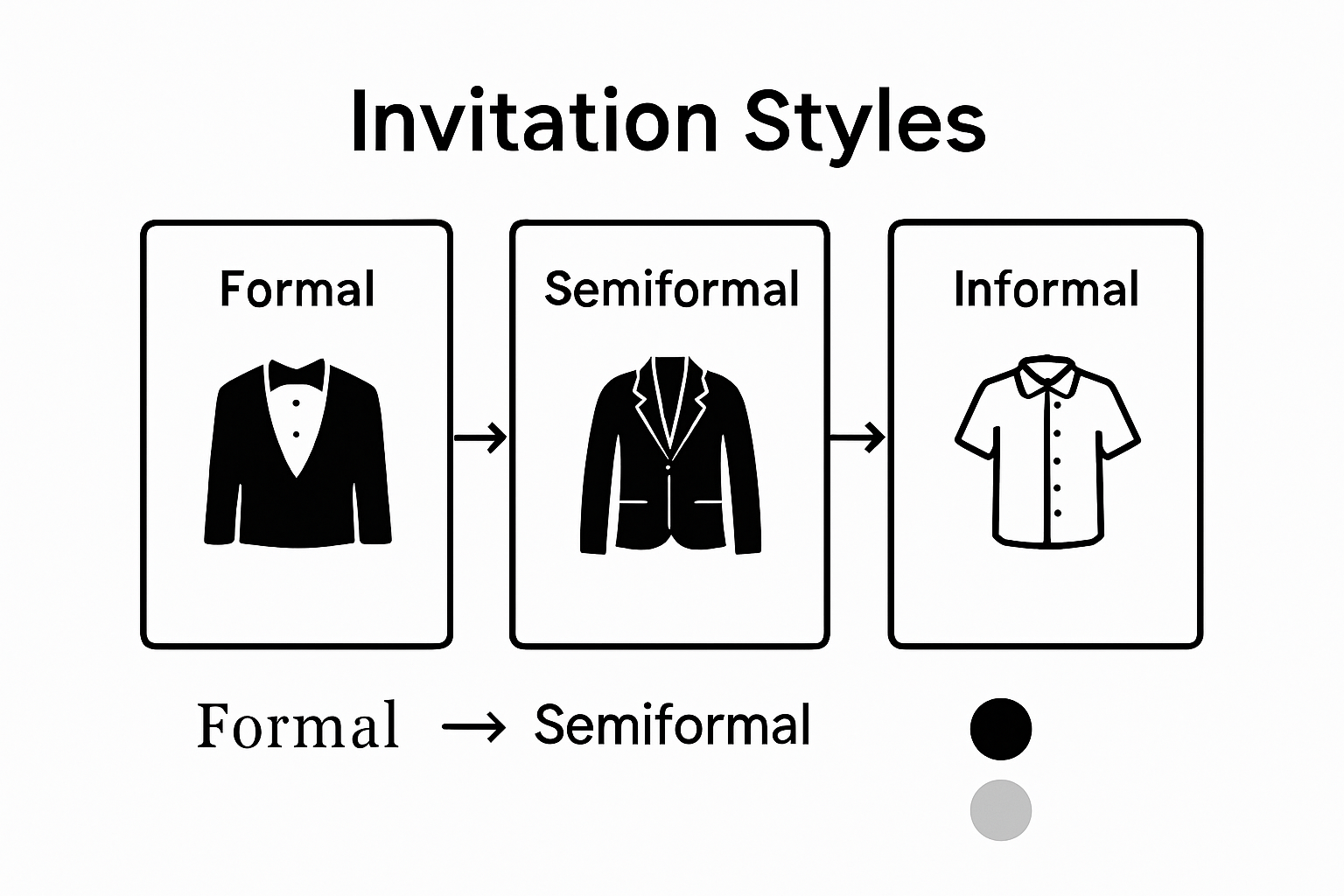
- Formal: Traditional language, elegant typography, formal third-person phrasing
- Semiformal: Balanced approach blending traditional elements with personal touches
- Informal: Conversational language, contemporary design, direct personal style
Linguistic and Visual Communication Strategies
The selection of language, typography, and design elements in your wedding invitation functions as a nuanced communication strategy. Word choice, sentence structure, and visual composition collectively create a narrative that extends beyond simple event information.
For couples planning a multilingual or culturally diverse celebration, our guide on creative event invitations offers innovative approaches to crafting invitations that respectfully represent complex cultural backgrounds. The invitation becomes an opportunity to showcase your unique relationship story, bridging personal heritage with contemporary wedding communication styles.
Ultimately, the tone and style of your invitation should authentically represent the couple’s collective personality, creating an emotional connection with guests before the actual event and building anticipation for the celebration to come.
The following table compares the three primary levels of invitation formality discussed in the article, helping couples understand how wording and design choices set the event’s tone.
| Formality Level | Language Style | Design Characteristics | Tone Communicated |
|---|---|---|---|
| Formal | Traditional, third-person phrasing | Elegant typography, classic paper | Sophisticated and traditional |
| Semiformal | Blend of traditional and personal | Balanced modern and classic style | Warm, elegant, inviting |
| Informal | Conversational, direct | Contemporary design, relaxed look | Casual and personable |
Common Mistakes to Avoid in Wedding Invitations
Wedding invitation errors can create unnecessary confusion, potentially diminish the professional appearance of your event communication, and even impact guest perception and attendance. Understanding and avoiding common pitfalls ensures your invitation effectively communicates your celebration’s essential details.
Addressing and Guest List Complications
According to wedding etiquette experts, incorrect guest addressing represents one of the most frequent and problematic invitation errors. Precision in guest names and relationships demonstrates respect and attention to detail.
Common addressing mistakes include:
- Misspelling guest names
- Using incorrect titles or salutations
- Ambiguous plus-one invitations
- Inconsistent family name formatting
- Overlooking special relationship dynamics
Logistical and Information Errors
Beyond addressing, several logistical mistakes can compromise your invitation’s effectiveness. Critical information must be crystal clear to prevent potential misunderstandings or guest inconvenience.
Key areas prone to errors include:
- Unclear or incomplete venue details
- Incorrect date or time specifications
- Ambiguous dress code instructions
- Missing RSVP contact information
- Incomplete transportation or accommodation guidance
For more creative approaches to avoiding these pitfalls, couples can leverage innovative design and communication strategies that preemptively address potential confusion. Thoughtful, comprehensive invitations not only provide information but also reflect the couple’s organizational skills and consideration for their guests’ experience.
This table summarises the most common mistakes couples make when creating and sending wedding invitations, assisting in avoiding pitfalls that could impact guest experience.
| Common Mistake | Description | Potential Consequence |
|---|---|---|
| Misspelling guest names | Errors or typos in guests’ names | Offence or confusion |
| Incorrect titles or salutations | Using wrong or outdated forms of address | Perceived disrespect |
| Ambiguous plus-one invitations | Unclear who is invited as a guest’s companion | Unwanted extra attendees or uncertainty |
| Unclear venue details | Missing or inaccurate address information | Guests may be late or lost |
| Missing RSVP instructions | Failing to spell out how and when to respond | Unreliable headcount |
| Incomplete dress code guidance | Omitting or muddling instructions about appropriate attire | Inappropriate clothing choices |
| Overlooking relationship nuances | Ignoring blended families or special relationship situations in addressing | Hurt feelings or misunderstandings |
Elevate Your First Impression with the Perfect Celebration
You have spent so much care crafting invitations that set the right tone and convey your respect for your guests. But do not stop at the envelope. Give your wedding the same attention to atmosphere by ensuring the event day feels just as welcoming and unforgettable as your invitation suggests. At Calle Habana, we understand that every detail—right from the first invitation—should reflect your unique style and vision.
Explore more wedding ideas and discover how our live music can transform your special day. Browse our wedding entertainment options for inspiration that brings your celebration to life. Ready to match the elegance of your invitations with an atmosphere full of energy and joy? Contact our team today at Calle Habana and let us help turn your plans into treasured memories.
Frequently Asked Questions
What is the purpose of wedding invitation etiquette?
Wedding invitation etiquette serves to communicate the formality, tone, and expectations of your wedding to guests, ensuring they understand how to prepare for the event.
What are the key components that should be included in a wedding invitation?
A wedding invitation should include host names, couple’s names, the date and time, venue location, and RSVP instructions to provide comprehensive information to guests.
How can the design and wording of an invitation affect its tone?
The design and wording convey subtle messages about the event’s atmosphere, whether informal or formal, and reflect the couple’s personality, setting expectations for guests.
What are common mistakes to avoid when sending out wedding invitations?
Common mistakes include incorrect guest addressing, ambiguous details regarding the date and venue, and missing RSVP information, which can lead to confusion and miscommunication.