Event branding is shaping the way people remember gatherings, with organisers focused on making every moment resonate. Most see banners, colours, and logos as the big draw. Yet the statistics tell a different story. Well-branded events can increase attendee engagement by up to 65 percent, which means the true power of branding lives deep beneath the surface design. The secret sits in how an event’s identity shapes conversations, emotions, and memories long after the crowd has gone — and that’s exactly where the strategy of branding your event becomes essential.
Quick Summary
| Takeaway | Explanation |
|---|---|
| Event branding is essential for engagement | A strong brand identity can increase attendee engagement by up to 65%, making it vital for success. |
| Craft a compelling narrative | Developing a unique storytelling framework enhances attendee connection and can boost engagement by 70%. |
| Visual identity communicates values | Consistent visual elements like colour and design help convey the event’s purpose and differentiate it from competitors. |
| Enhance guest experience emotionally | Effective branding fosters emotional engagement, creating memorable interactions that resonate with participants. |
| Successful examples inspire creativity | Analyzing branded events like TED and Coachella reveals strategies to create distinctive and impactful experiences. |

What is Event Branding and Why Does It Matter?
Event branding is a strategic process of creating a unique, memorable identity for an event that communicates its core purpose, values, and experience. It goes beyond simple visual design, encompassing a comprehensive approach that transforms an ordinary gathering into a distinctive and impactful experience.
The Essence of Event Branding
At its core, event branding is about crafting a cohesive narrative that resonates with your target audience. It involves developing a consistent visual and emotional language that differentiates your event from others. This means creating a holistic identity that includes:
- Visual elements like logos, colour schemes, and design aesthetics
- Consistent messaging and communication style
- Unique experiential components that reflect the event’s personality
Strategic Importance of Branding Your Event
Branding your event is not merely cosmetic but a critical strategic tool. According to EventBrite’s research, well-branded events can increase attendee engagement by up to 65% and create lasting impressions that extend beyond the event itself.
Successful event branding achieves multiple strategic objectives:
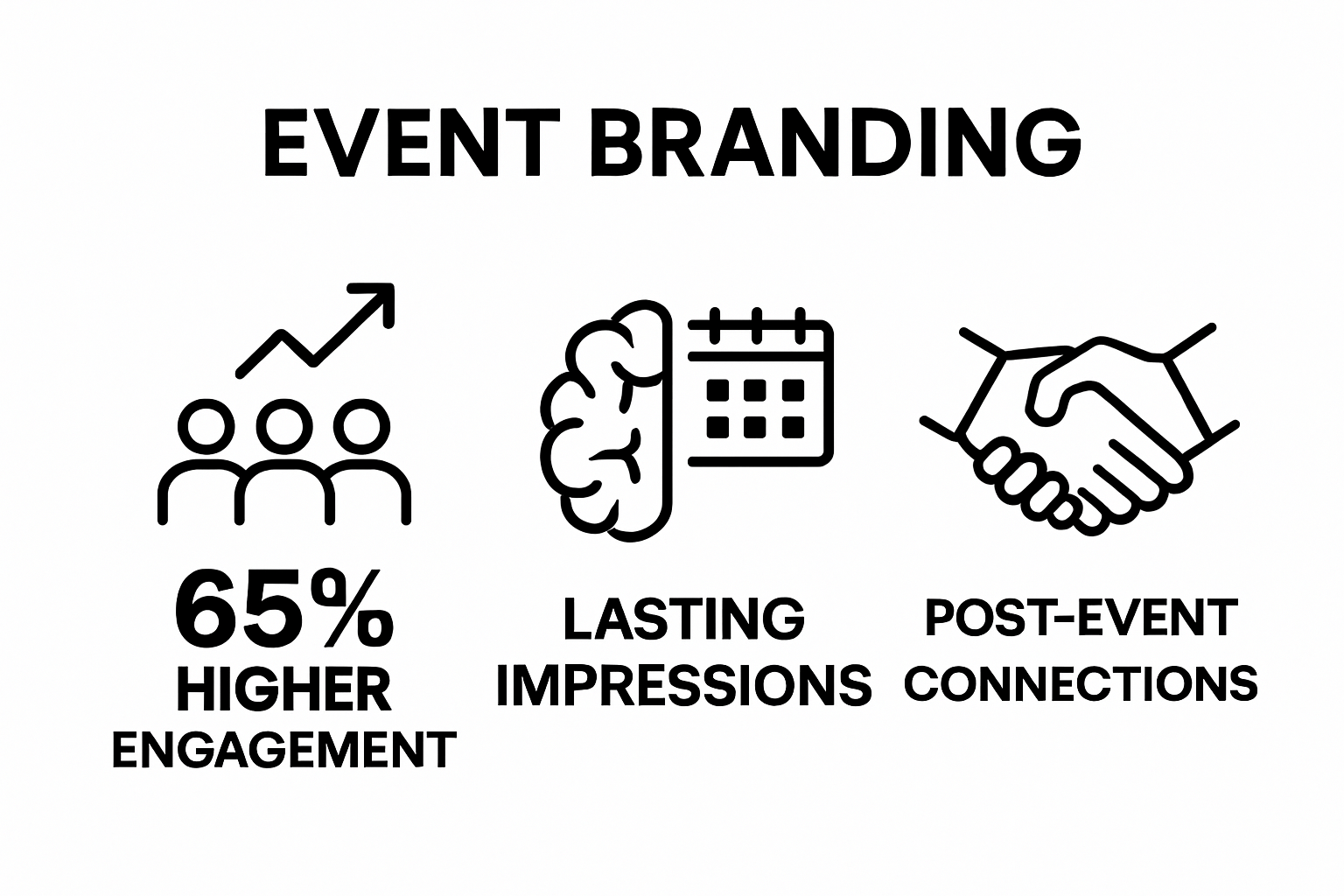
- Generates anticipation and excitement before the event
- Creates a memorable experience during the event
- Establishes a lasting connection with participants after the event concludn
By investing time and creativity into branding your event, you transform it from a simple gathering into a powerful, memorable experience that stands out in a crowded marketplace.
The Impact of a Strong Brand Identity on Events
A strong brand identity transforms an event from a mere gathering into a powerful, memorable experience that resonates deeply with participants and creates lasting emotional connections. It serves as the foundational framework that communicates an event’s unique value proposition and distinguishes it in an increasingly competitive landscape.
Emotional and Psychological Engagement
Brand identity goes far beyond visual aesthetics, functioning as a psychological trigger that influences attendee perceptions and emotional responses. When an event’s brand effectively communicates its core values and purpose, it creates a sense of anticipation, belonging, and connection that transcends the event’s immediate timeframe.
According to research from the International Events Management Association, events with robust brand identities can significantly enhance participant engagement by:
- Creating a memorable and distinctive experience
- Establishing an immediate emotional connection
- Generating positive psychological associations
Strategic Differentiation and Perception
A meticulously crafted brand identity serves as a strategic differentiator in a crowded event marketplace. It enables organisers to communicate their unique value proposition clearly and compellingly, helping potential attendees understand what makes their event special and worth participating in. This is why branding your event is not just about visuals, but about creating a holistic identity that reflects purpose and values.
Moreover, a consistent and well-designed brand identity signals professionalism, credibility, and attention to detail. It transforms an event from a generic experience into a distinctive, memorable occasion that stands out in participants’ minds long after the event concludes.
The table below compares how strong event branding influences both emotional engagement and strategic differentiation, as discussed in the article.
| Aspect | Emotional & Psychological Engagement | Strategic Differentiation & Perception |
|---|---|---|
| Role of Branding | Triggers emotional responses and anticipation | Communicates unique value proposition, sets event apart |
| Attendee Impact | Creates a sense of belonging and connection | Signals professionalism and credibility |
| Outcome | Memorable experiences, positive associations | Distinct, lasting impression in a crowded market |
| Long-term Effect | Generates lasting emotional memories | Encourages word-of-mouth and future attendance |
By investing thoughtfully in brand identity, event organisers can create powerful, emotionally resonant experiences that not only attract participants but also build lasting connections and generate positive word-of-mouth recommendations.

Key Elements That Define Your Event’s Brand
Defining an event’s brand involves a comprehensive approach that integrates multiple strategic components, creating a holistic identity that communicates the event’s essence and connects meaningfully with its target audience. This process requires careful consideration of both tangible and intangible elements that collectively shape participants’ perceptions and experiences. In this sense, branding your event becomes the guiding framework that ensures consistency, clarity, and emotional resonance across every stage of the experience.
To help clarify the core components that make up a compelling event brand, the table below summarises the key elements and their functions as highlighted in the guide.
| Element | Description |
|---|---|
| Visual Elements | Logos, colour palettes, typography, and graphic design that visually convey the event identity |
| Messaging & Communication | Consistent language and tone that reflect the event’s values and core messages |
| Experiential Components | Unique interactive elements or experiences reflecting the event’s personality |
| Narrative & Storytelling | Cohesive story or theme that communicates uniqueness and resonates with guests |
| Personalisation | Tailoring aspects of the event to connect with individual attendee preferences |
| Emotional Positioning | Strategies to inspire feelings of belonging and emotional connection |
| Sensory & Environmental Design | Use of space, music, lighting, and decor to create a holistic branded atmosphere |
Visual and Design Identity
Visual branding serves as the fundamental language of your event’s identity. This encompasses more than just aesthetic choices, representing a strategic communication tool that instantly conveys the event’s personality, purpose, and values. Key visual elements include:
- Distinctive colour palettes that evoke specific emotional responses
- Typography that reflects the event’s character
- Logos and graphic design that communicate the event’s core message
Narrative and Emotional Positioning
Beyond visual elements, an event’s brand is deeply rooted in its narrative and emotional positioning. Research from the Event Marketing Institute suggests that events which craft a compelling storytelling framework can increase attendee engagement by up to 70%.
The narrative should articulate what makes your event unique, creating an emotional connection that transcends mere functional details. This involves developing a clear, authentic voice that resonates with your target audience and differentiates your event in a crowded marketplace.
Learn more about crafting compelling event experiences that leave lasting impressions on participants.
Successful event branding requires a nuanced understanding of your audience’s aspirations, challenges, and emotional triggers. By meticulously integrating visual, narrative, and experiential elements, you can create a brand identity that not only attracts participants but also generates long-term loyalty and meaningful connections.

How Event Branding Enhances Guest Experience
Event branding is a powerful mechanism for transforming an ordinary gathering into an extraordinary, immersive experience that resonates deeply with participants. By strategically designing every touchpoint of interaction, event organisers can create meaningful connections that extend far beyond the event’s immediate duration. In practice, branding your event ensures that every detail — from visuals to communication tone — contributes to a cohesive and memorable guest experience.
Emotional Resonance and Personal Connection
Guest experience is fundamentally an emotional journey, where each interaction contributes to an overarching narrative. Effective event branding crafts these interactions to generate positive, memorable emotional responses. This involves understanding and anticipating attendee expectations, then designing experiences that not only meet but exceed those expectations.
According to experiential design research, successful event branding achieves emotional engagement through:
- Creating intuitive, seamless participant interactions
- Developing a consistent and authentic brand persona
- Personalising experiences to individual attendee preferences
Sensory and Psychological Engagement
Beyond visual aesthetics, event branding operates on multiple sensory and psychological levels. It transforms physical spaces and interactions into storytelling platforms that communicate the event’s core values and purpose. Every element from colour schemes to musical selections becomes a strategic communication tool.
Learn more about creating memorable musical experiences that elevate your event’s emotional impact.By meticulously designing these sensory touchpoints, event organisers can create immersive environments that subtly guide participant emotions, expectations, and overall perception of the event. The result is a holistic experience that feels both intentional and organically compelling.
Real-World Examples of Successful Event Branding
Successful event branding transcends theoretical concepts, demonstrating how strategic design and storytelling can transform ordinary gatherings into extraordinary experiences. By examining real-world case studies, event organisers can glean valuable insights into creating memorable and impactful brand identities. These examples highlight how branding your event effectively can turn vision into reality, ensuring every detail aligns with the intended message and guest experience.
Corporate and Conference Branding Excellence
Corporate events represent sophisticated platforms for demonstrating brand sophistication. Companies like TED and Apple have masterfully transformed their events into globally recognised experiences that extend far beyond traditional conference formats. These organisations create immersive environments where every visual, auditory, and interactive element reinforces their core brand narrative.
According to event marketing research, successful corporate event branding typically involves:
- Developing a consistent visual language across all event materials
- Creating unique spatial experiences that reflect brand values
- Integrating interactive technologies that enhance participant engagement
Music and Cultural Festival Branding
Music festivals like Coachella and Burning Man demonstrate how powerful event branding can create entire cultural movements. These events have transcended mere entertainment, becoming global phenomena that represent specific lifestyles, aesthetics, and community values.
Check out our guide on creating memorable musical experiences that capture audience imagination.By crafting narratives that resonate deeply with participants, these events transform from simple gatherings into transformative cultural experiences. Their success lies not just in artistic lineup or logistical execution, but in their ability to create immersive, shareable moments that participants will remember and discuss long after the event concludes.
Transform Your Event Branding Into an Unforgettable Experience
You have learned that lasting event impact depends on more than clever visuals or fleeting excitement.** A strong, consistent brand identity creates emotional memories and a genuine sense of belonging for guests.** But how do you ensure your next gathering stands out, resonates emotionally, and lingers in minds long after the last song? The answer lies in weaving every detail—from music to ambience—into your story.
At Calle Habana, we specialise in bringing brand stories to life through high-energy live Latin bands and tailored musical experiences that reflect your event’s unique character. Whether you are designing a signature moment for a Barcelona event, searching for the perfect live band to reinforce your event identity, or creating a sense of unity at a corporate gathering, our expert team shapes the soundtrack to match your message. Ready to ensure your event’s identity is truly unforgettable? Enquire now and discover how Calle Habana can elevate your next event by visiting our contact page today.
Frequently Asked Questions
What is event branding?
Event branding is the process of creating a unique identity for an event that conveys its core purpose, values, and experience through consistent visual design and messaging.
Why is branding important for events?
Branding enhances attendee engagement, generates anticipation, and creates memorable experiences, establishing lasting connections with participants beyond the event itself.
How can visual elements influence event branding?
Visual elements like colour schemes, logos, and typography serve as a strategic communication tool that conveys an event’s personality and values, making it more memorable and distinct.
What role does emotional engagement play in event branding?
Emotional engagement is crucial as it influences attendees’ perceptions and responses, creating a sense of belonging and connection that elevates the overall event experience.