Music industry terminology might sound like a maze of jargon reserved for insiders, but every conversation and decision backstage hangs on these words. Here is something most people miss. Accurate use of these terms can significantly reduce misunderstandings and errors during live events and productions by ensuring clear, consistent communication. Knowing this not only sets you apart in a crowded field but can actually change the entire outcome of an event or creative project.
Quick Summary
| Takeaway | Explanation |
|---|---|
| Master music terminology for effective communication | Understanding industry language facilitates clearer interactions among professionals, reducing misunderstandings and errors. |
| Identify key roles for successful events | Knowing the responsibilities of musicians, engineers, and managers aids in effective collaboration during performances and productions. |
| Recognise various music genres and formats | Familiarity with genres and formats helps professionals address audience expectations and performance requirements accurately. |
| Understand essential aspects of music contracts | Being aware of contract types and their clauses is crucial for protecting artists and managing business relationships. |
| Utilise terminology for enhanced live experiences | Mastering technical terms improves coordination and execution, leading to more successful and polished live events. |
What is Music Industry Terminology and Its Importance?
Music industry terminology represents a specialised language used by professionals to communicate complex concepts, roles, processes, and technical details within the music and entertainment sectors. Understanding these terms is crucial for effective communication, professional collaboration, and navigating the intricate landscape of musical events and productions.
Defining Music Industry Language
Music industry terminology encompasses a wide range of technical, administrative, and creative vocabulary that enables precise communication among musicians, event organisers, sound engineers, managers, and other professionals. These terms cover everything from performance roles and technical equipment specifications to contractual agreements and creative processes.
Key Components of Music Industry Language Include:
- Technical audio terminology (mixing, mastering, sound engineering)
- Performance and artist management vocabulary
- Contractual and legal music business terms
- Event production and stage management language
- Recording and studio production terminology
Professional Communication and Efficiency
Professional music industry practitioners rely on standardised terminology to ensure clarity, reduce misunderstandings, and streamline complex workflows. According to Music Business Worldwide, precise communication can significantly reduce errors and improve overall event and production efficiency.
By mastering music industry terminology, professionals can:
- Communicate technical requirements accurately
- Negotiate contracts with greater precision
- Understand complex production workflows
- Collaborate more effectively across different specialisations
- Present themselves as knowledgeable and credible professionals
For event organisers and music professionals, developing a comprehensive understanding of industry-specific language is not just about vocabulary—it is about building a foundation for successful, smooth, and professional musical experiences.
Key Terms in Music: From Genres to Formats
Music industry terminology extends far beyond technical jargon, encompassing a complex landscape of genres, formats, and performance classifications that define how musical experiences are created, marketed, and consumed. Understanding these fundamental categories helps event organisers, musicians, and entertainment professionals navigate the intricate world of musical expression.
Music Genres and Their Significance
Music genres represent distinctive categories of musical expression, each with unique characteristics, historical contexts, and cultural significance. These classifications help professionals communicate musical styles, audience expectations, and performance requirements. Core music genres include:
- Classical (orchestral, chamber music)
- Jazz (swing, bebop, fusion)
- Rock (alternative, indie, classic rock)
- Electronic (techno, house, ambient)
- Latin (salsa, bachata, reggaeton)
- Pop (contemporary, indie pop)
- World Music (traditional cultural music)
Music Formats and Performance Contexts
Music formats describe the medium and method of musical presentation, ranging from traditional live performances to digital and recorded experiences. According to Encyclopaedia Britannica, these formats have evolved dramatically with technological advancements.
Primary Music Formats Include:
- Live band performances
- Solo acoustic sets
- DJ and electronic music sets
- Recorded studio tracks
- Streaming platform releases
- Vinyl and physical album recordings
- Digital music downloads
Performance and Production Classifications
Beyond genres and formats, music industry professionals use specific terms to describe performance styles, ensemble compositions, and production characteristics. These classifications provide precise communication about musical arrangements, technical requirements, and artistic intentions.
Understanding these nuanced terms allows event organisers to curate experiences that match specific musical aesthetics, technical needs, and audience expectations. Whether planning a corporate event, wedding reception, or cultural celebration, mastering these music industry terminologies ensures seamless musical programming and professional execution.
Roles and Responsibilities within the Music Industry
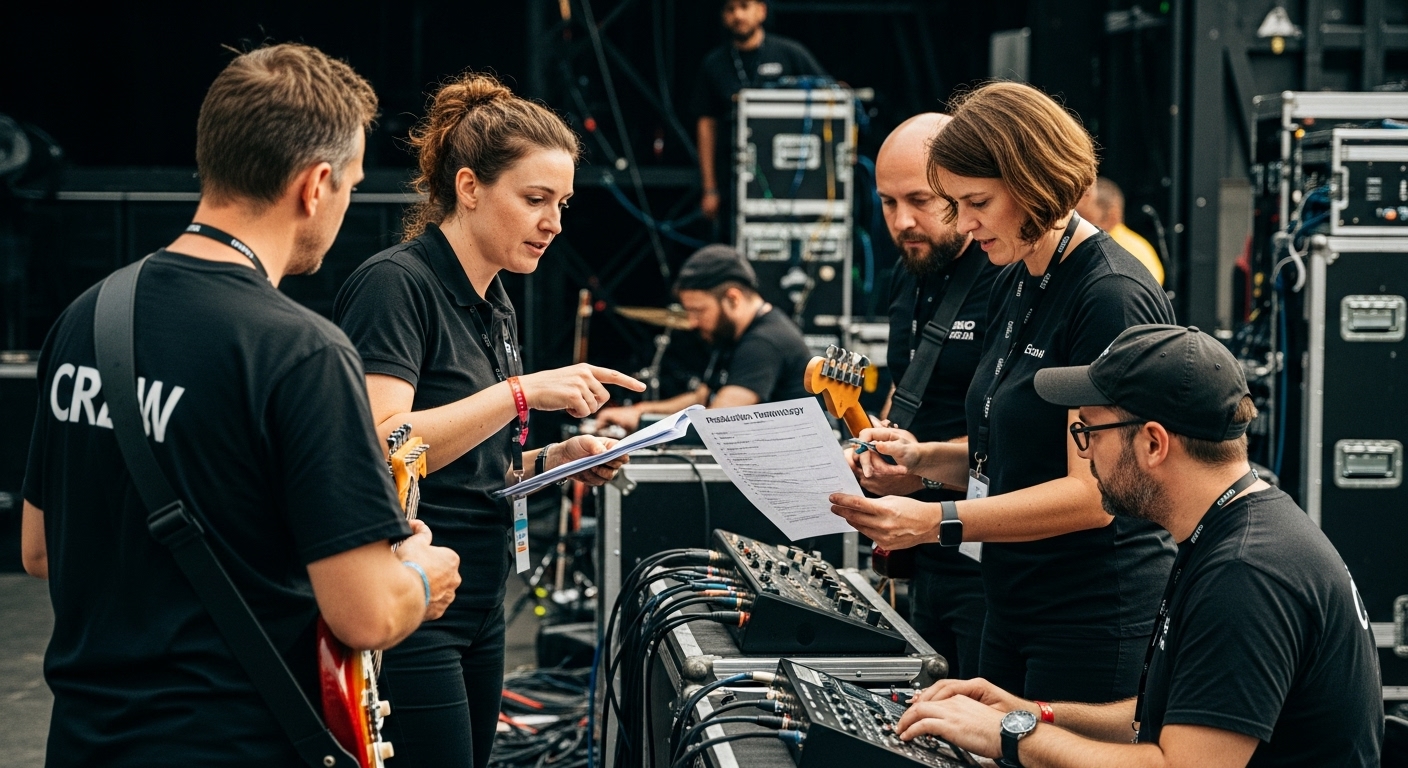
The music industry is a complex ecosystem comprising diverse professionals who collaborate to create, produce, promote, and deliver musical experiences. Each role carries specific responsibilities that contribute to the seamless execution of musical events, recordings, and performances.
Core Performance and Production Roles
Performance and production professionals form the backbone of musical experiences. These roles require technical expertise, creative skills, and the ability to work collaboratively under dynamic conditions. According to Berklee College of Music, critical roles include:
- Musicians: Primary performers delivering musical content
- Sound Engineers: Technical experts managing audio quality
- Stage Managers: Coordinating event logistics and performance flow
- Backline Technicians: Maintaining and preparing musical instruments
- Lighting Designers: Creating visual atmosphere for performances
Artist Management and Event Coordination
Behind every successful musical performance lies a network of professionals managing artistic careers, event logistics, and business operations. These roles involve strategic planning, negotiations, and comprehensive event management.
Key Management Responsibilities Include:
- Booking and scheduling performances
- Negotiating contracts and performance fees
- Managing artist travel and accommodation
- Coordinating technical and technical requirements
- Marketing and promotional activities
Business and Administrative Roles
The business side of the music industry involves professionals who ensure financial sustainability, legal compliance, and strategic growth. These roles bridge creative expression with commercial viability.
Business professionals handle critical functions such as:
- Music publishing and licensing
- Artist representation and contract management
- Recording label operations
- Marketing and digital distribution strategies
- Financial planning and royalty management
Understanding these interconnected roles provides insight into the complex machinery that transforms musical creativity into professional, memorable experiences for audiences worldwide.
The table below summarises core roles found within the music industry alongside a brief description of each role to clarify their primary responsibilities and professional contribution.
| Music Industry Role | Description |
|---|---|
| Musicians | Performers responsible for delivering musical content at events. |
| Sound Engineers | Technical specialists managing the quality, balance, and clarity of audio. |
| Stage Managers | Oversee event logistics, coordinate performance flow, and manage timing. |
| Backline Technicians | Maintain and prepare musical instruments and technical gear. |
| Lighting Designers | Create visual atmospheres and lighting concepts for performances. |
| Artist Managers | Handle bookings, contracts, and career planning for artists. |
| Event Coordinators | Plan and oversee event logistics, technical needs, and promotion. |
How Music Contracts Function and Their Significance
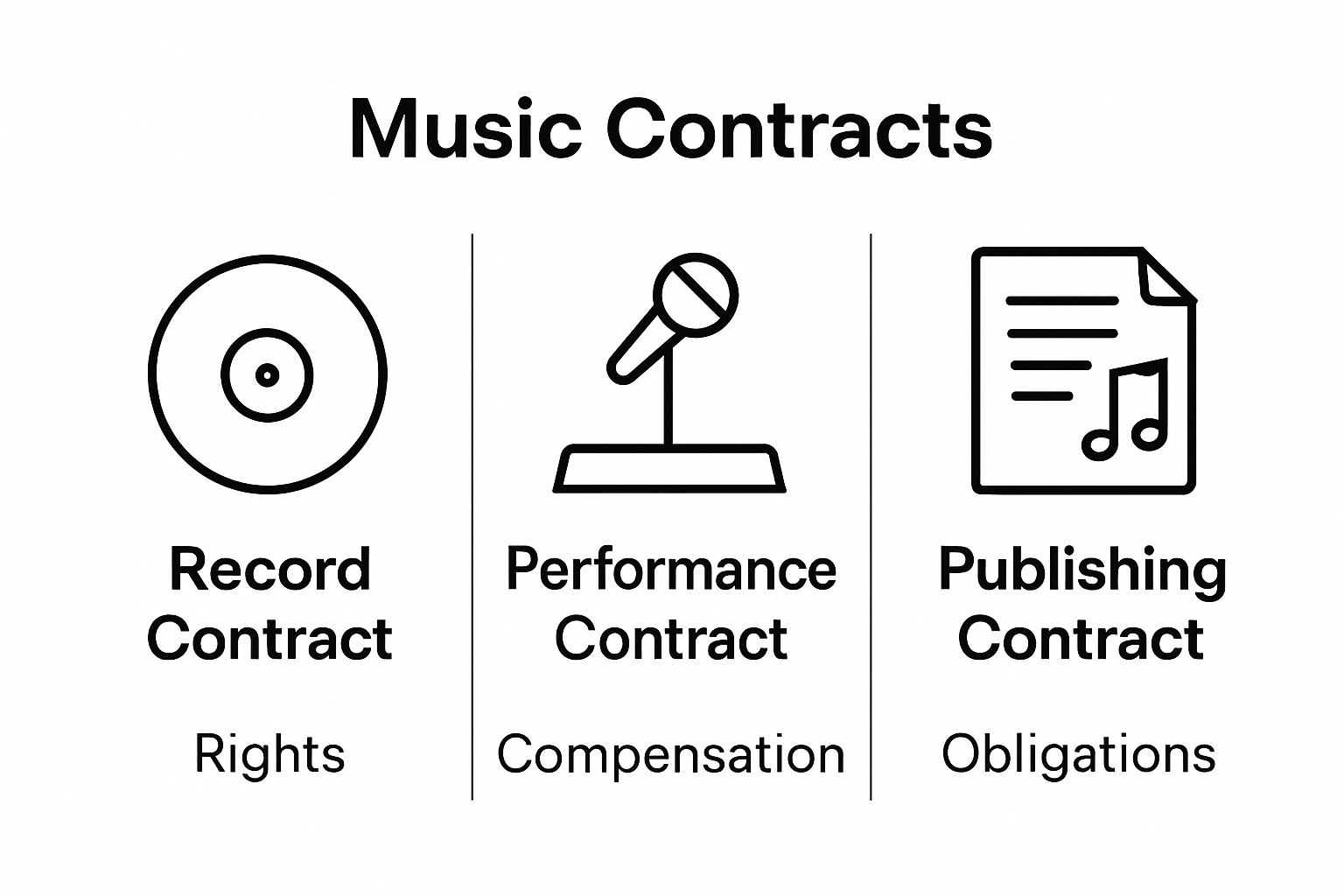
Music contracts represent legally binding agreements that define the financial, creative, and operational relationships between artists, producers, record labels, and other music industry professionals. These complex documents establish rights, responsibilities, compensation structures, and performance expectations in the dynamic world of musical production and distribution.
Fundamental Contract Types
Music industry contracts vary widely, each serving specific purposes and addressing unique professional interactions.
Primary contract categories include:
- Recording contracts
- Publishing agreements
- Performance and touring contracts
- Management representation agreements
- Licensing and distribution deals
- 360-degree comprehensive contracts
Legal and Financial Mechanisms
Contracts in the music industry serve multiple critical functions beyond simple transactional agreements. According to Queen Mary University of London, these documents establish comprehensive frameworks that protect intellectual property, define revenue sharing, and outline professional obligations.
Key Contractual Elements Include:
- Intellectual property rights allocation
- Revenue and royalty distribution models
- Performance and delivery expectations
- Term length and renewal conditions
- Termination and dispute resolution clauses
Evolving Contract Landscape
Modern music contracts have transformed dramatically with technological advancements and changing industry dynamics. Digital platforms, streaming services, and global distribution channels have introduced more complex negotiation structures, requiring increasingly sophisticated legal frameworks.
Professionals must navigate these intricate agreements, understanding nuanced terms that impact artistic creativity, financial compensation, and long-term career trajectories.
This table offers an overview of fundamental music contract types encountered in the industry, with concise descriptions to support a clearer understanding of their distinct purposes and functions.
| Contract Type | Description |
|---|---|
| Recording Contract | Agreement between artist and record label for producing and distributing music. |
| Publishing Agreement | Sets terms for the management and monetisation of compositions. |
| Performance/Touring Contract | Defines terms and conditions for live performances and tours. |
| Management Representation | Outlines the relationship between artists and their managers. |
| Licensing and Distribution Deal | Grants rights to distribute or exploit music in various markets. |
| 360-Degree Contract | Covers multiple aspects of an artist’s career, including music, merchandising, and touring. |
Live music events represent complex ecosystems where precise communication and understanding of specialised terminology directly influence the quality of performance, audience experience, and overall event success. Professional terminology serves as a critical navigational tool that bridges technical requirements, creative expectations, and logistical considerations.
Technical Communication in Live Performances
Technical terminology provides a universal language that enables seamless communication between performers, sound engineers, stage managers, and event organisers. Key technical communication areas include:
- Sound system configuration
- Stage layout and equipment placement
- Audio mixing and monitoring requirements
- Performance signal flow
- Acoustic environment management
Performance Experience and Audience Interaction
According to KEXP’s Music Industry Glossary, understanding specific performance terms enhances audience appreciation and engagement. Professionals use nuanced terminology to describe:
- Performance energy levels
- Musical dynamics and emotional intensity
- Audience interaction techniques
- Genre-specific performance expectations
- Improvisation and spontaneous musical moments
Strategic Event Management
Professional music event management relies on precise terminology to coordinate complex logistical requirements. This specialised language ensures:
- Clear communication across multiple professional teams
- Efficient problem-solving during live performances
- Accurate translation of creative vision into technical execution
- Streamlined rehearsal and performance preparation
- Consistent quality across different performance venues
Mastering music industry terminology transforms live events from simple performances into sophisticated, carefully orchestrated experiences that resonate with audiences and reflect professional excellence.
Elevate Your Event With Expertly Curated Live Music
You have seen how vital it is to master music industry terminology to ensure seamless communication and flawless event experiences. Every organiser wants performances where technical details, genres, and roles are clearly understood and expertly managed. The challenge is transforming this knowledge into unforgettable moments that leave a lasting impression on your guests.
At Calle Habana, we speak the language of live events. Our team translates those essential music industry concepts into vibrant, tailored performances. With a wide repertoire spanning salsa, bachata, reggaeton, pop, and soul, we match the right formats and ensembles to fit any ceremony, cocktail hour, or reception. We understand the details so you can simply enjoy the atmosphere.
Do you want to create a lively, engaging event where every musical detail is handled by professionals who truly understand the industry? Let us bridge the gap between technical know-how and show-stopping entertainment. Take the next step towards an unforgettable celebration by reaching out through our contact page today. Your perfect event starts with the right team, ready to turn industry expertise into a personal experience.
Frequently Asked Questions
What are the key components of music industry terminology?
Music industry terminology includes technical audio terms (like mixing and mastering), performance and artist management vocabulary, contractual and legal music business terms, event production language, and recording studio terminology.
Why is understanding music industry terminology important for professionals?
Understanding music industry terminology is crucial for effective communication, reducing misunderstandings, negotiating contracts, and streamlining collaboration among various professionals within the music sector.
What are the primary music formats used in the industry?
The primary music formats include live band performances, solo acoustic sets, DJ and electronic music sets, recorded studio tracks, streaming releases, physical album recordings, and digital music downloads.
How do music contracts function in the industry?
Music contracts are legally binding agreements that define the relationships between artists, producers, and labels. They establish rights, responsibilities, revenue sharing, and performance expectations, and are critical for protecting intellectual property and ensuring financial arrangements.